
Modernizing Amazon’s Talent Ecosystem
Challenge
In 2019, Amazon’s World Wide Operations (WWOps) faced a logistical paradox: we could deliver a package in 24 hours, but moving an internal employee to a new role took 48 days
Managing 88,000 hires and 22,000 transfers annually relied on fragmented dashboards and disconnected spreadsheets. A single transfer required 8 approvals across 40 different systems.
This friction resulted in high latency, data silos, and a reactive culture where leaders couldn't see talent risks until it was too late.
Goal
Design a unified, accessible, and data-driven ecosystem that empowers leaders to make proactive talent decisions with minimal friction.
Metrics to Consider
88,000+
New Hires
48
Days to Complete Transfer
22,000+
Internal Transfers
40
Disjointed Systems
43,000+
Promotions annually
8
Different Approvals
1300+
Recruiters to manage overhead
$1000000+
In Operational Waste
User Research
Spoke to over 30 site managers, org leaders, HRBP’s, and talent professionals in order to really understand the scope of the problem. The interviews were primarily semi structured. In order to understand the process inside and out, it was important that I participate in live talent planning, succession, and movement discussions over the course of months to understand requirements over seasonal changes. It is impossible to present the extent of research done here in any meaningful way. However, here are some of the major takeaways.
Data Silos
A manager had to visit one tool for performance ("Lift"), another for mobility ("TalentPulse"), and email a program manager to get a succession spreadsheet. Data did not persist across these boundaries
Cognitive Overload
Managers were acting as "data routers" rather than leaders, manually cross-referencing CSV files to make decisions on promotions or transfers. This also meant giving and receiving information across channels without any real tracking.
No Standardization
With 1,842 different sites, definitions of success varied wildy. Terms like "Critical Role" and "Retention Risk" meant different things to different managers, making data aggregation impossible
A glimpse into Excel Hell
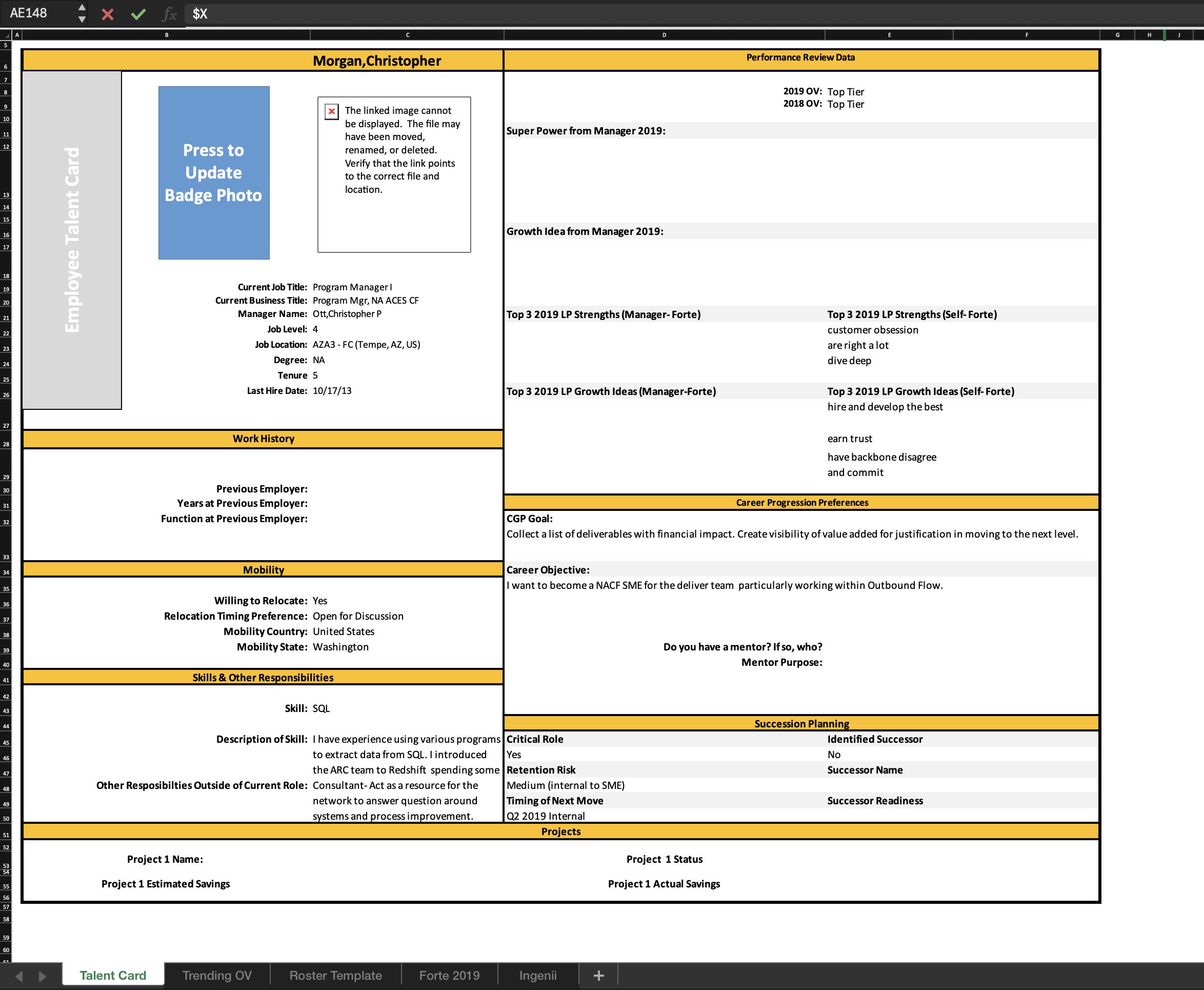
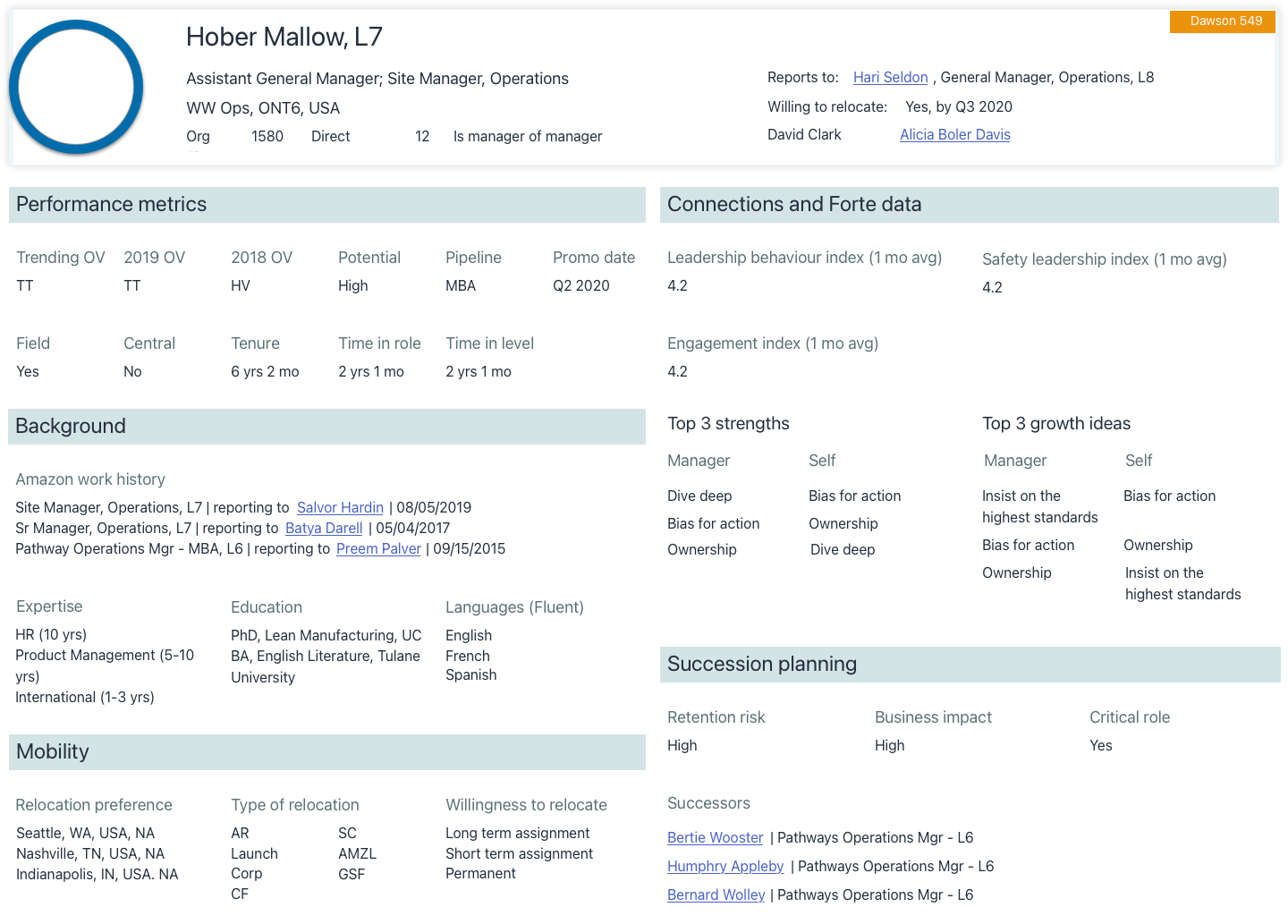
Talent Profiles in Excel as a way to create a snapshot of an employee. This data was disparate and different sites used different versions of this. Even though they all agreed that this was perhaps the most important atom of information needed for planning.
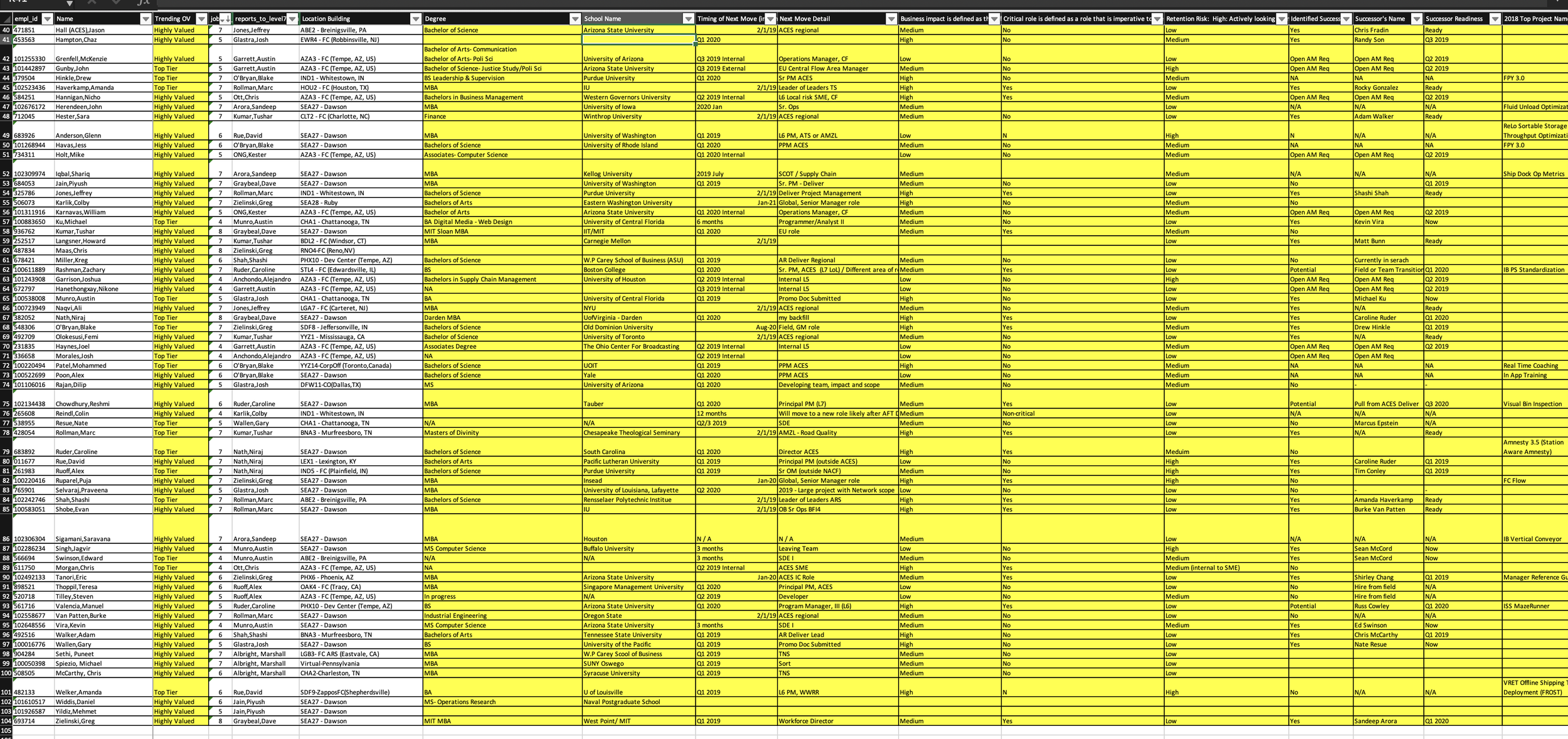
A trending “Overall Value” rating to track employee score over the year. This included a number of other information about the employee and indicated the general health of the site along with being crucial to talent movement.
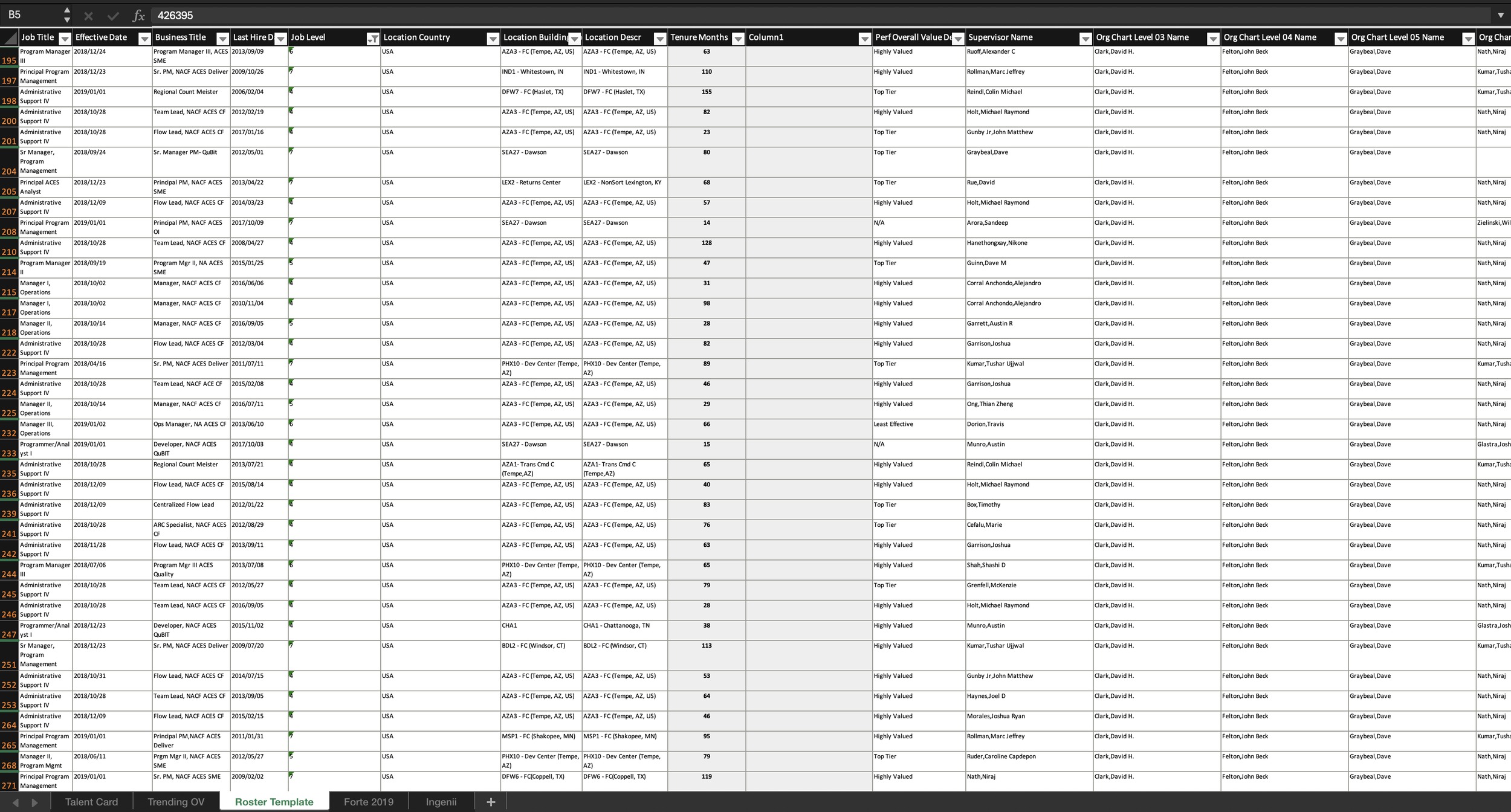
A roster template to search for, track, and manage a rotating employee list across sites. Managed and updated by tens of managers, manager of managers, directors, and HRBP’s on a daily basis. Constant need for reconciliation and correction along with being incorrect with outdated data at times.
Proposal
It was increasingly difficult for a single system to handle all the issues. Especially since there was no real design system to build upon when the project started. It was decided that this problem would need to be serviced across a suite of products that would talk to each other. This would reduce complexity and drive productivity.
Individual products that were deemed as core to the functioning of the system as a whole were built in modules, tested individually, then put together as part of the suite.
-
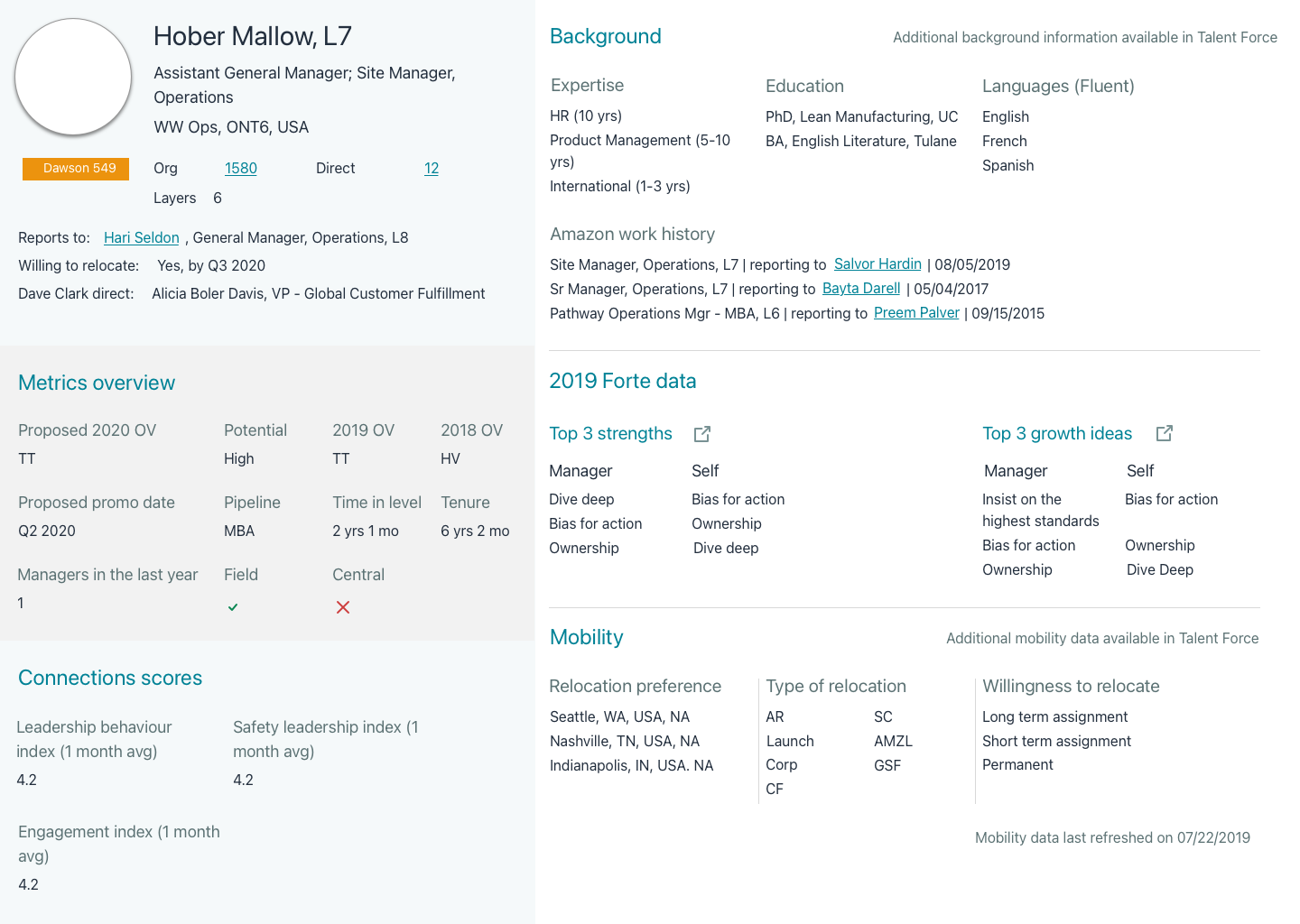
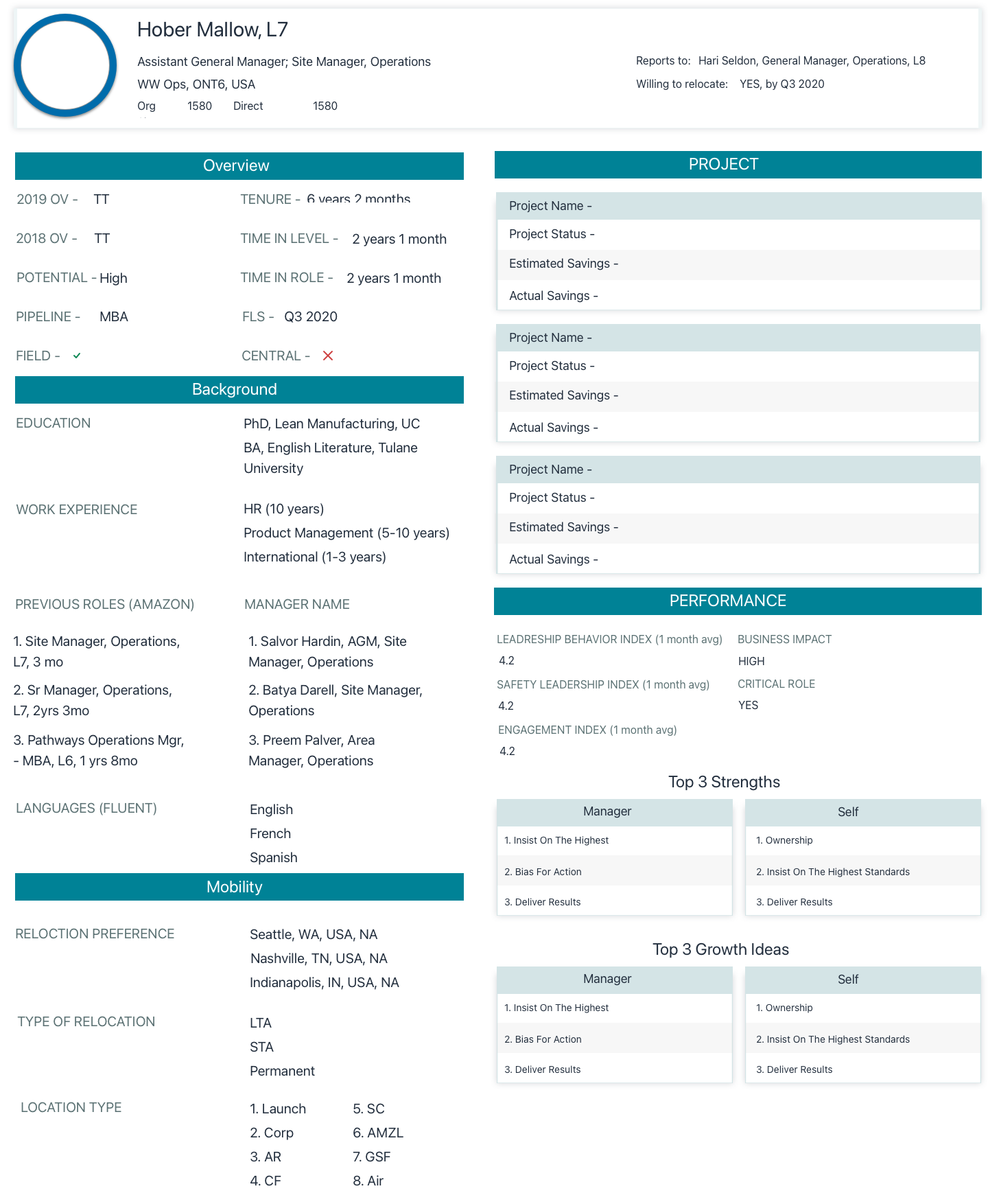
A modular, portable data container serving as the ecosystem's atomic unit, displaying essential metrics like mobility and assessment summaries to facilitate decision-making across a range of other products.
-
A permission-based discovery engine that democratizes access to opportunity, enabling leaders to scout internal talent via granular performance filters and "role similarity" matching to dismantle network-based bias
-
An intelligent succession planning and auditing product that replaces static spreadsheets with real-time data, empowering leaders to proactively identify diversity risks, critical role gaps, and downstream talent voids
-
A self-service mobility engine that proactively detects staffing risks at the site level and automates friction-free transfer workflows, reducing time-to-fill for high-volume roles from weeks to days
Overall Process

I conducted extensive user interviews, surveys, and observations across sites, hierarchies, job titles, and organizations. All the data, was then analyzed using mind mapping, affinity diagramming, and persona matching. After prioritizing the result based on the number of users that wanted it, I had a list of requirements that were essential to the long term success for this suite of products.
Additionally, user research and testing was not a one time activity. There was rapid and iterative research, design and testing done to ensure quick failures and recovery. Each design was sketched, prototyped, and then tested with a rotating customer base to ensure feedback did not become stale.
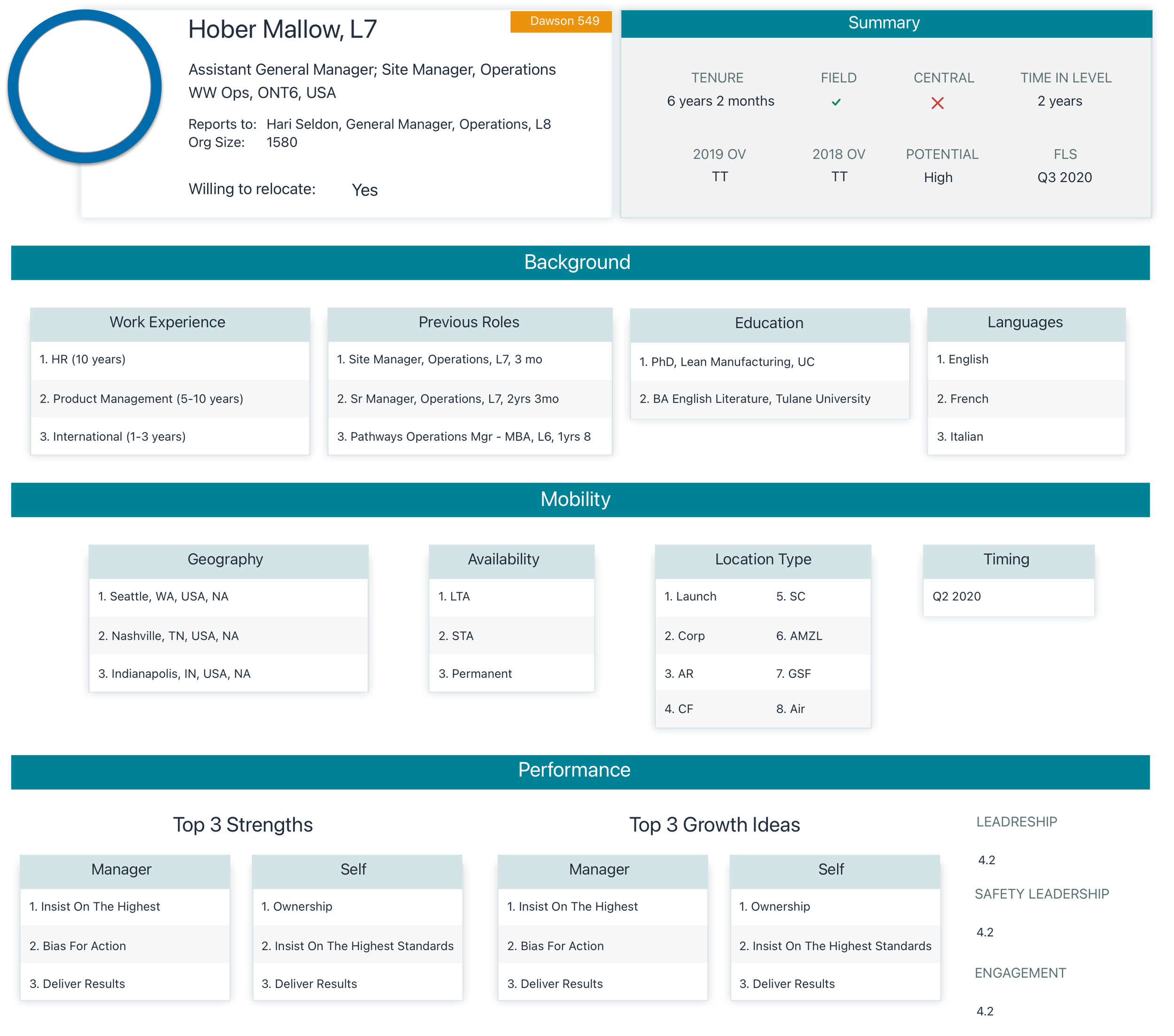
Talent Profile
The Challenge
In WWOps, "talent" was an abstract concept scattered across 40+ disconnected systems. To make a decision, a VP had to scavenge through dashboards, performance reviews, and unorganized spreadsheets. There was no single source of truth about the quality and quantity of talent available at Amazon.
Requirements
Polymorphic design that fits different use cases and products
Access based view
Performance and assessment metrics.
Mobility and career preferences
In card editing and data persistence
Before
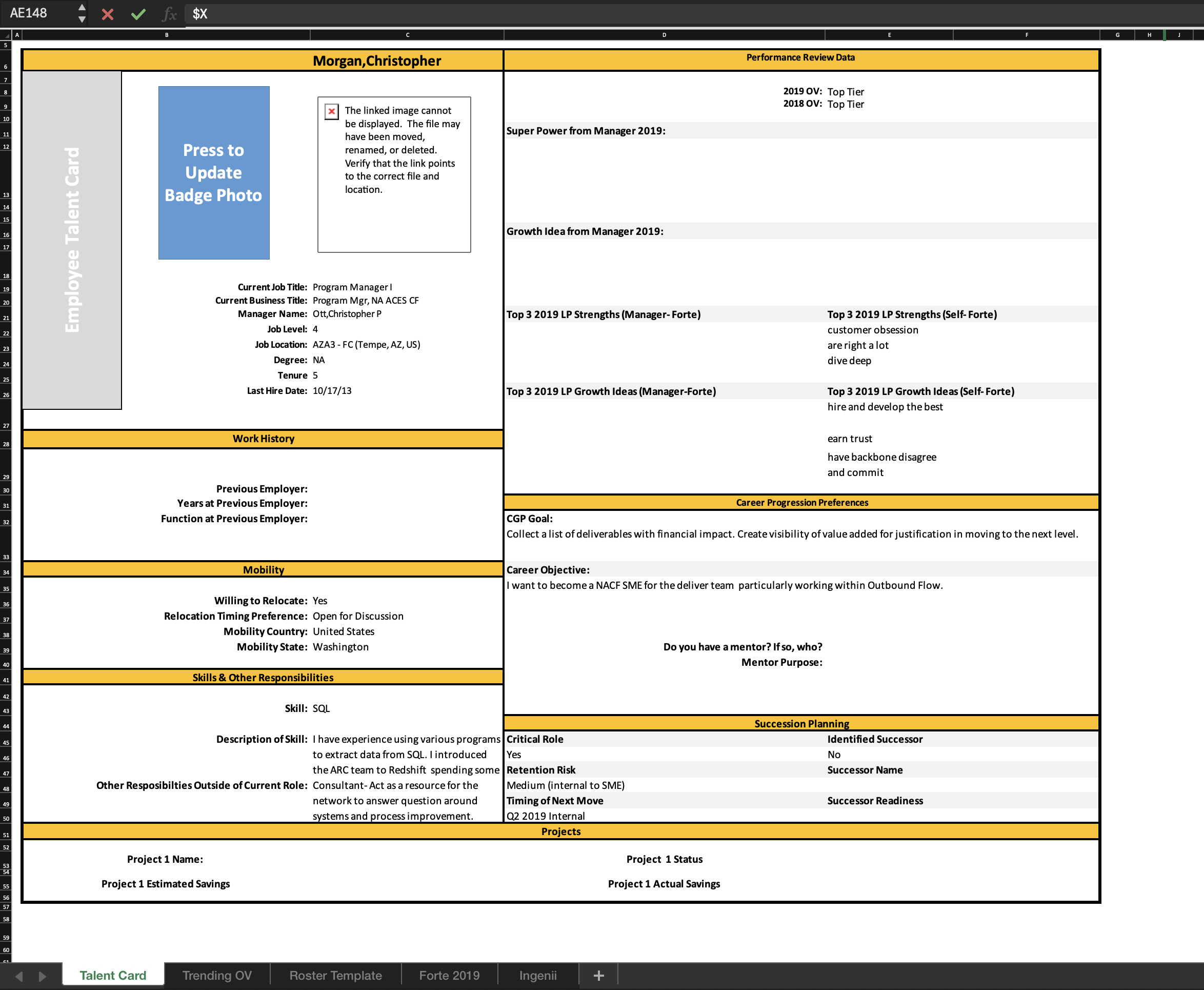
After
Full page card for deep dives
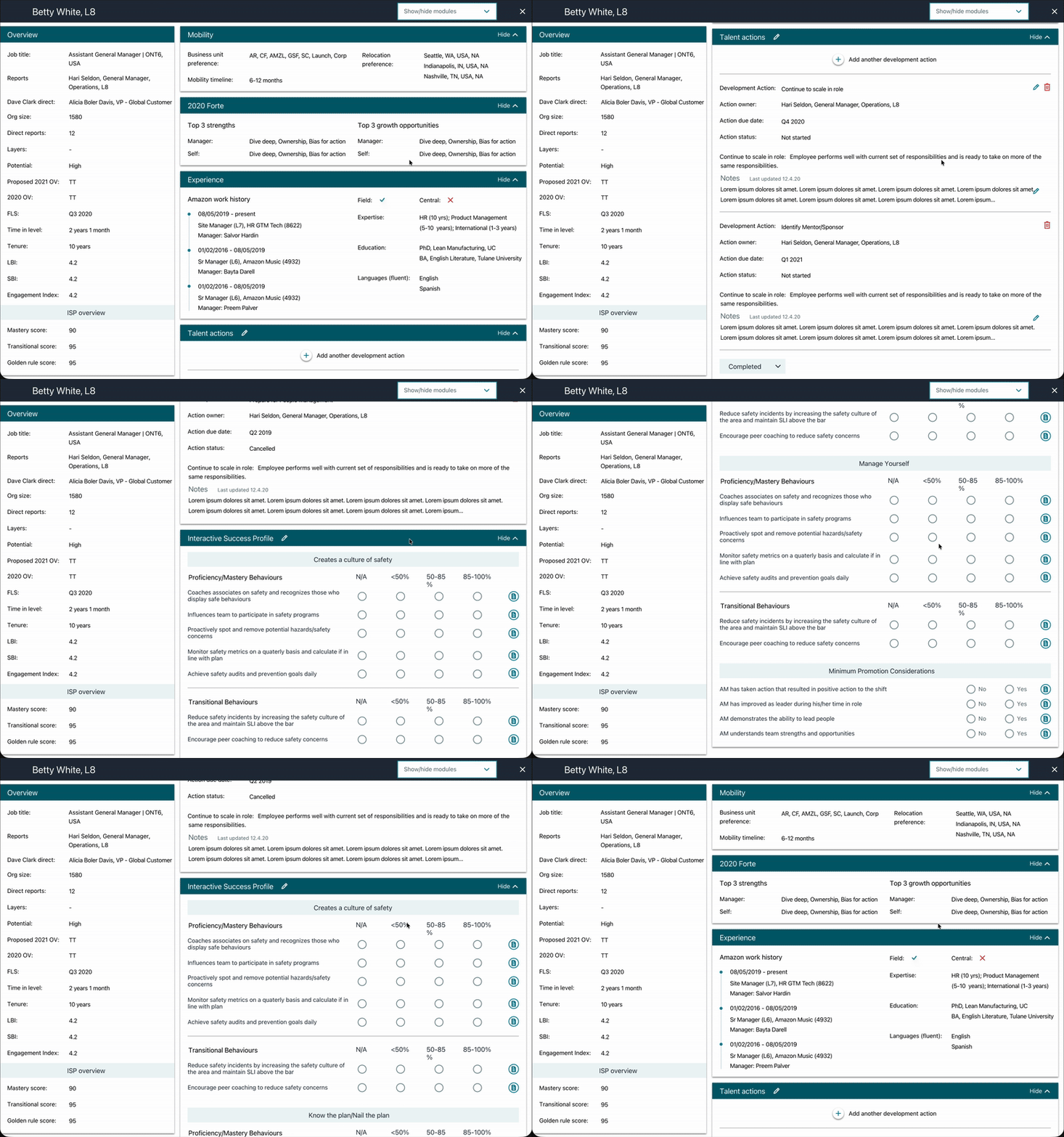
As snapshot
Side fly-outs for contextual inquiry
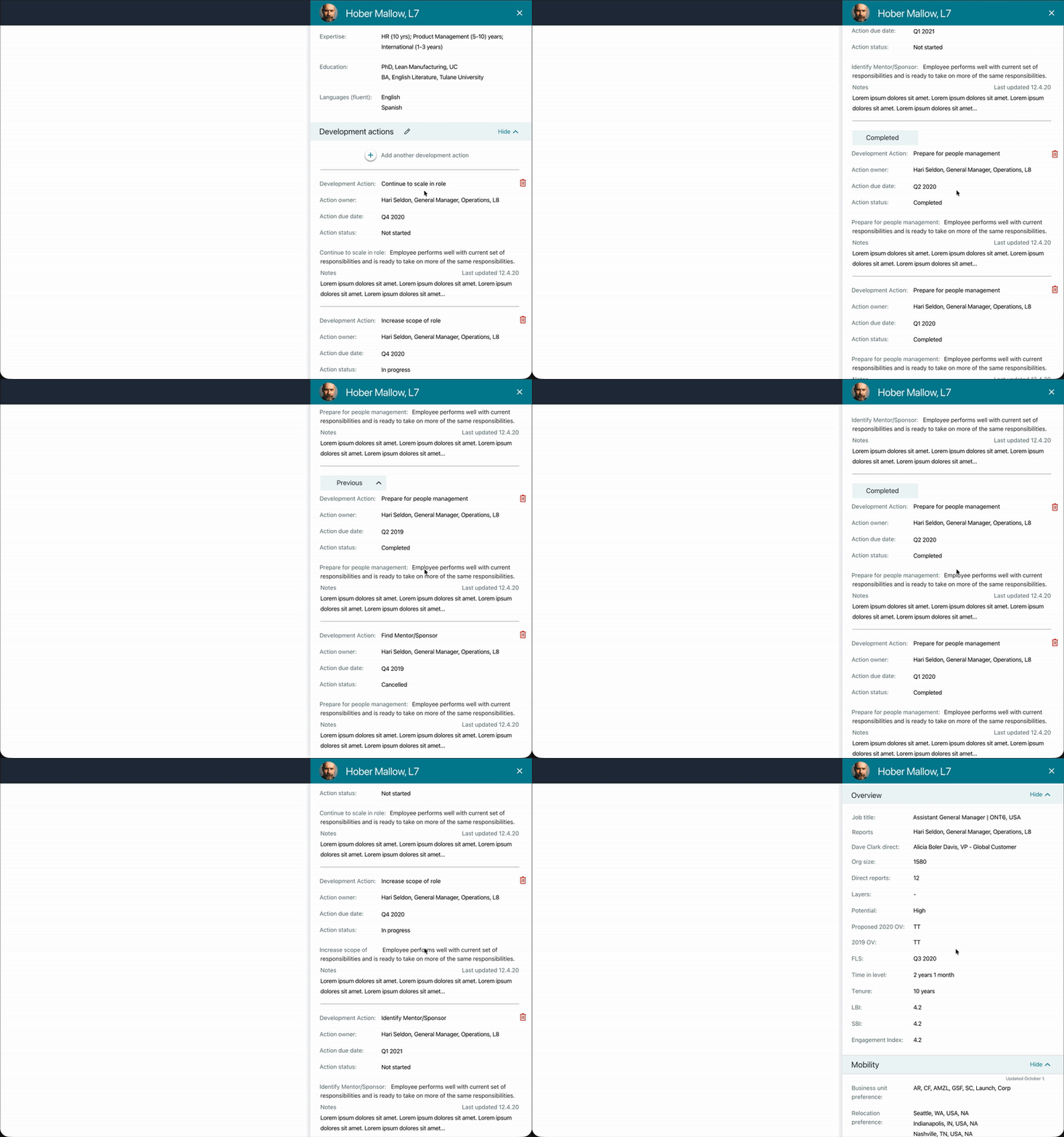
As baseball card

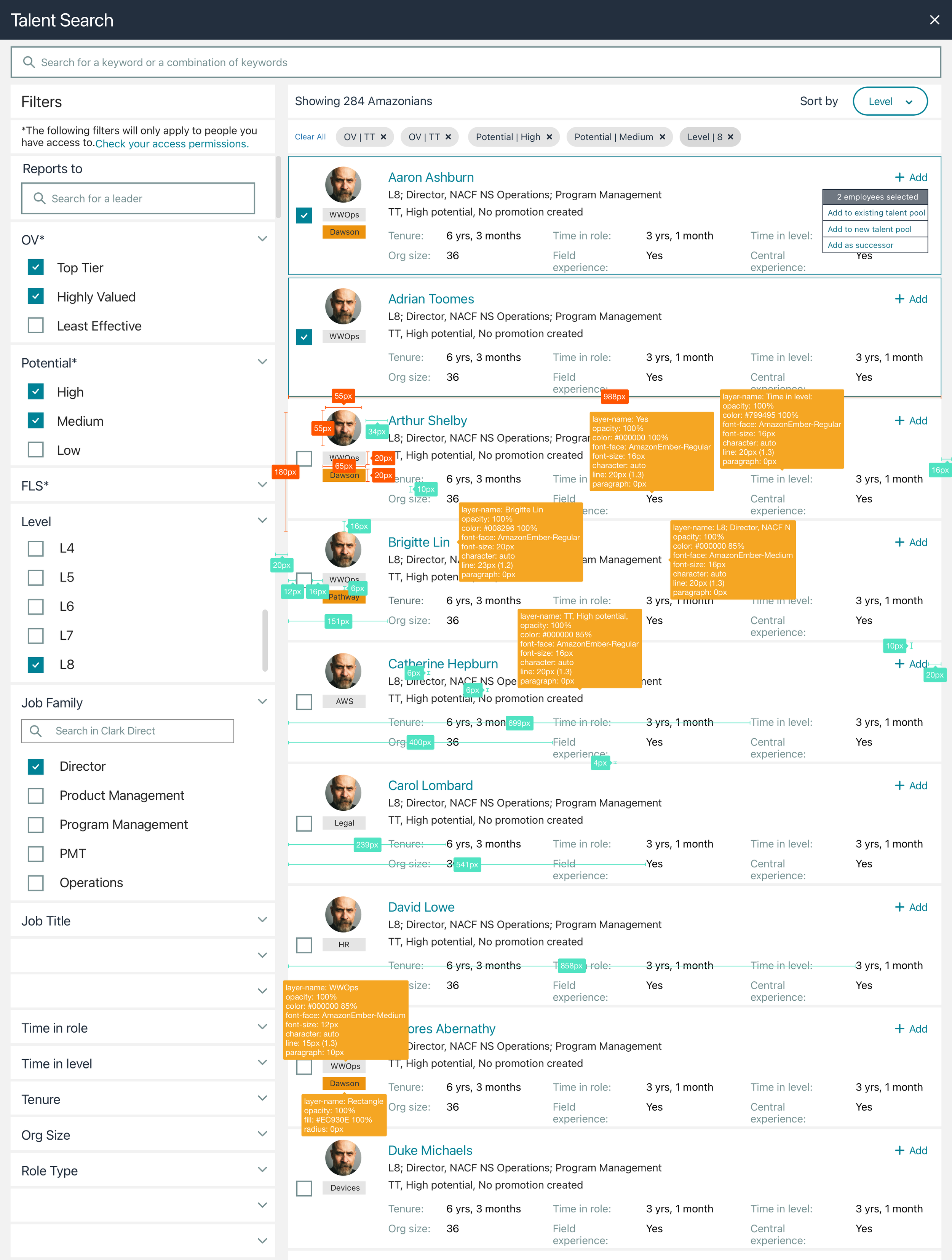
Talent Search
Challenge
There is no standard product to provide visibility within Amazon to find, move, and retain talent. This often meant hiring externally, even when available internal talent was more suitable for filling the role. We also needed to reduce network bias in hiring and provide a bigger pool of talent to choose form.
Requirement
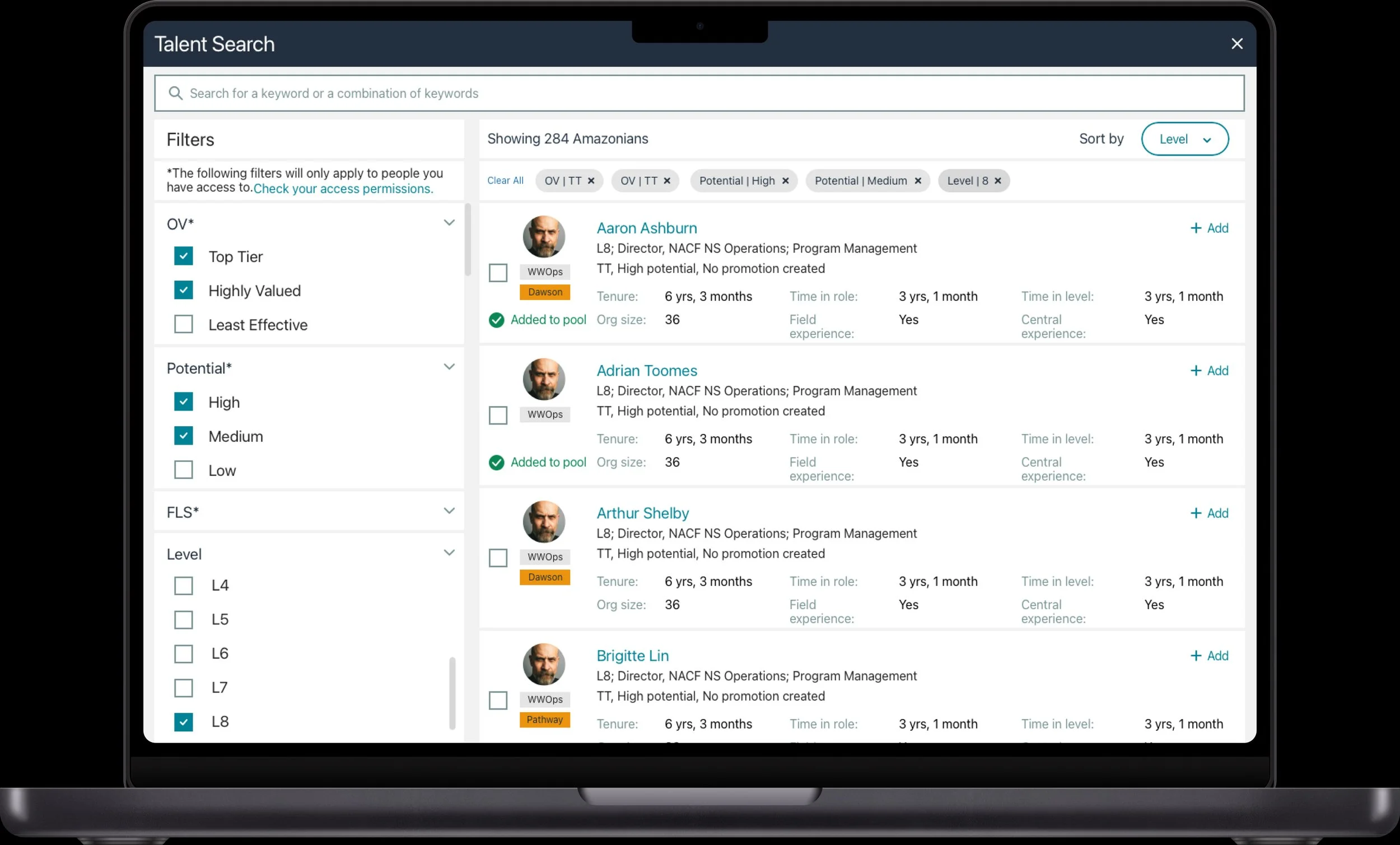
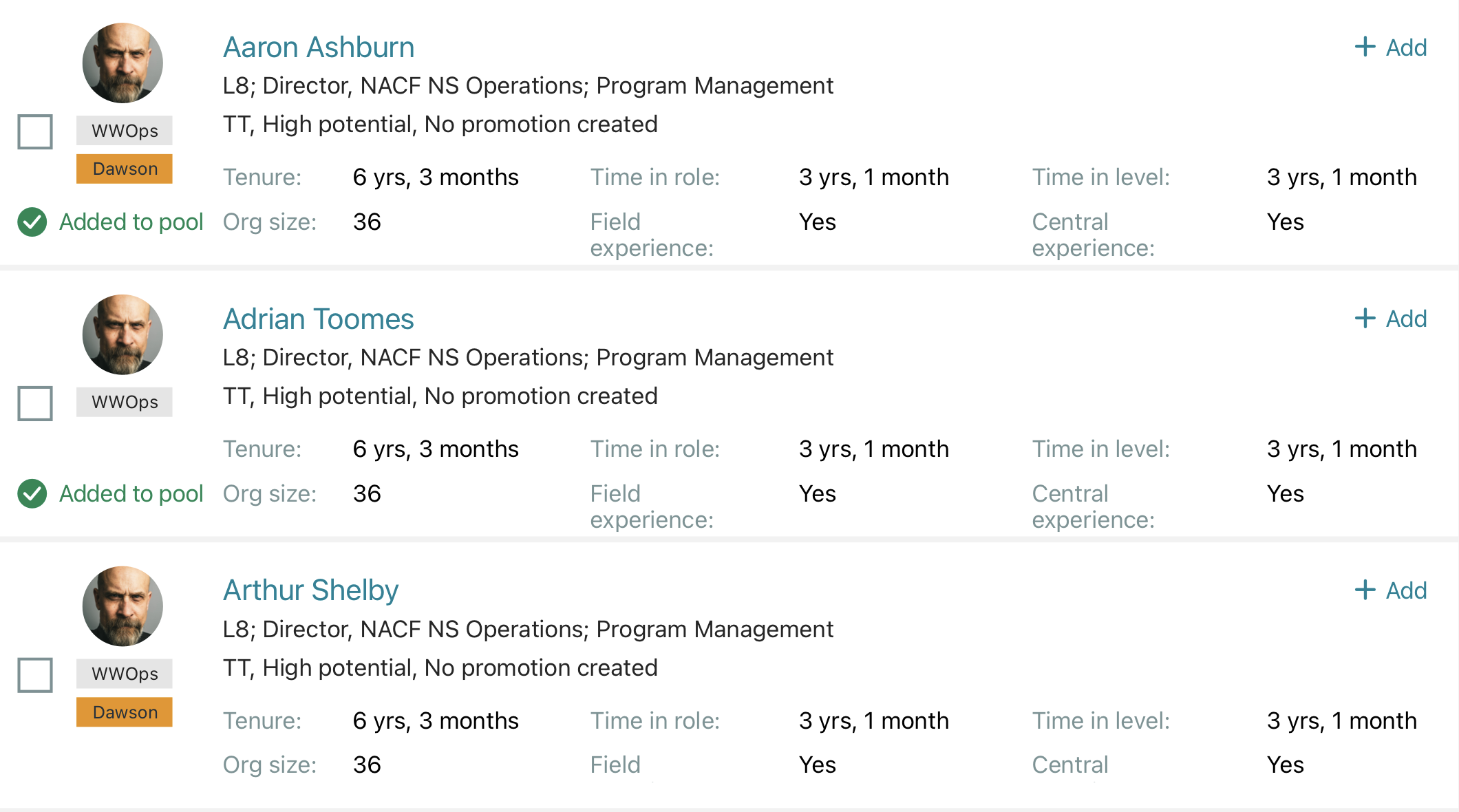
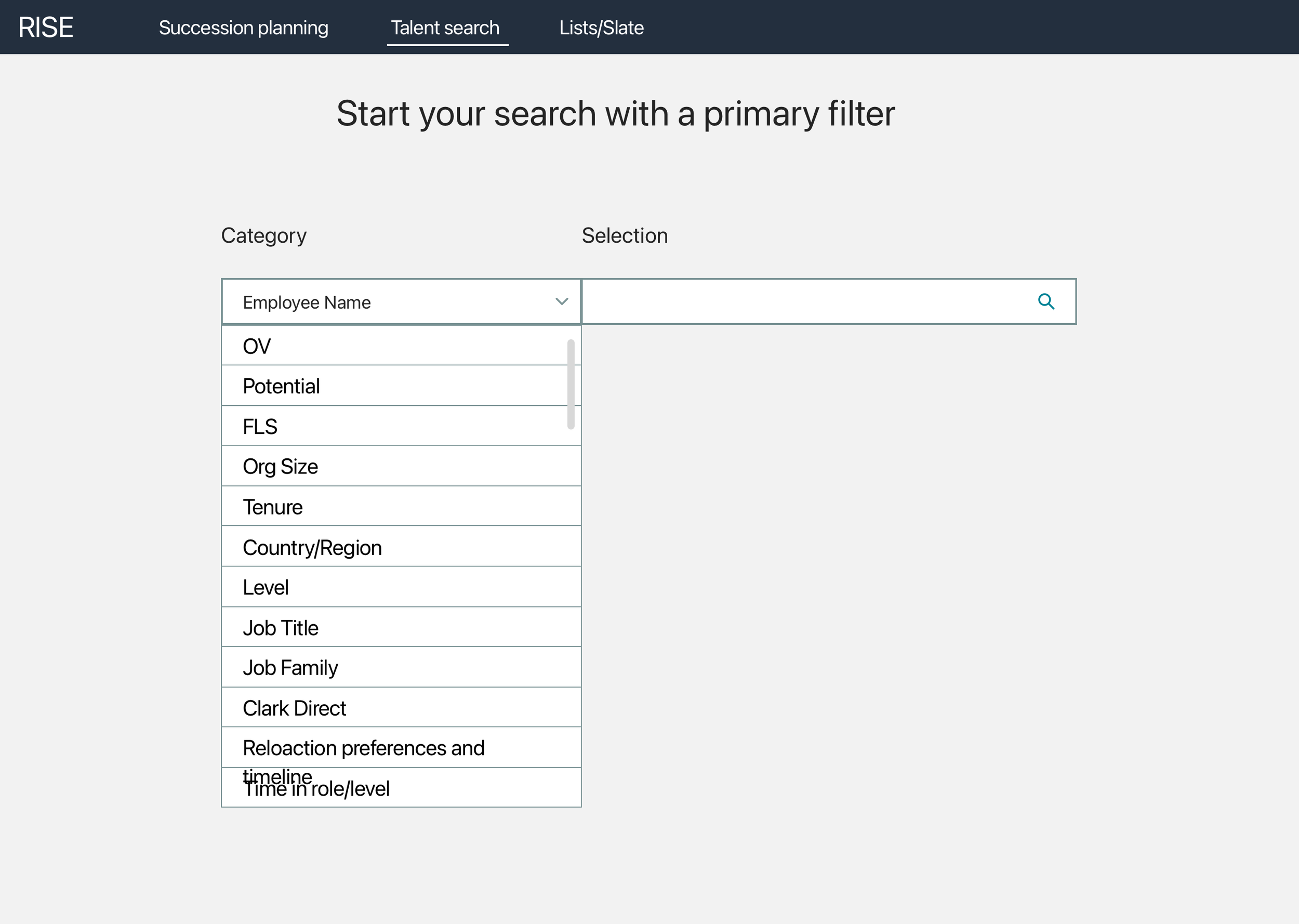
We built a permission-aware Talent Search engine that allows leaders to filter the entire Amazon population by specific criteria (e.g., "Ready for Promo," "Willing to Relocate to Nashville"). It was privacy first and allowed role based access permission for viewing details about employees.
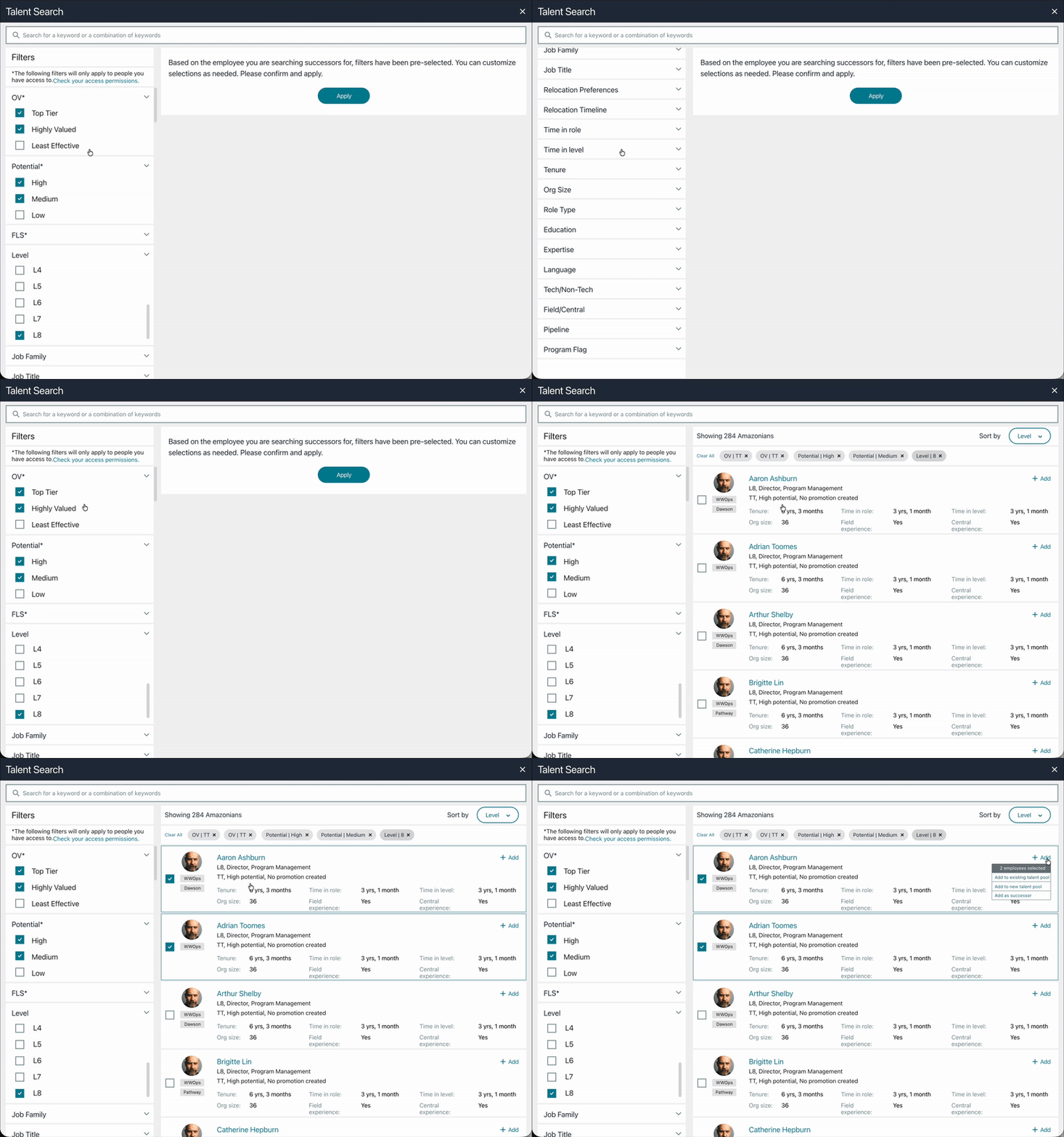
Created an company wide search engine that surfaced all Amazon employees through open search or via selected criteria.
Added quick filters to narrow down more than 1 million employee database depending on performance rating, level, job title, movement preferences, and a host of other metrics.
Made sure the experience was deeply tied into and complimentary to the suite of products being created. This search could be activated from any product that required talent discovery and had the ability to read and write information to those products.
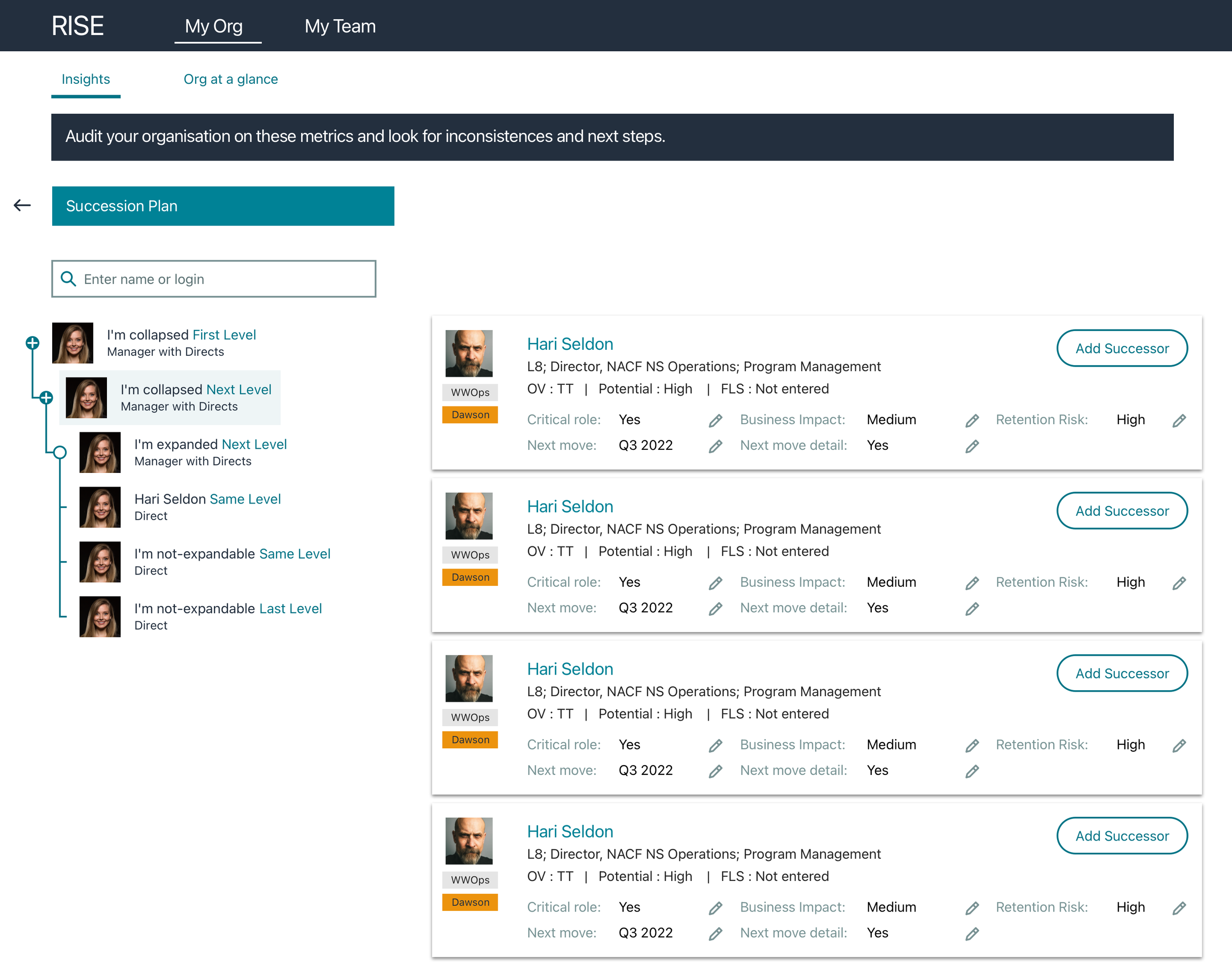
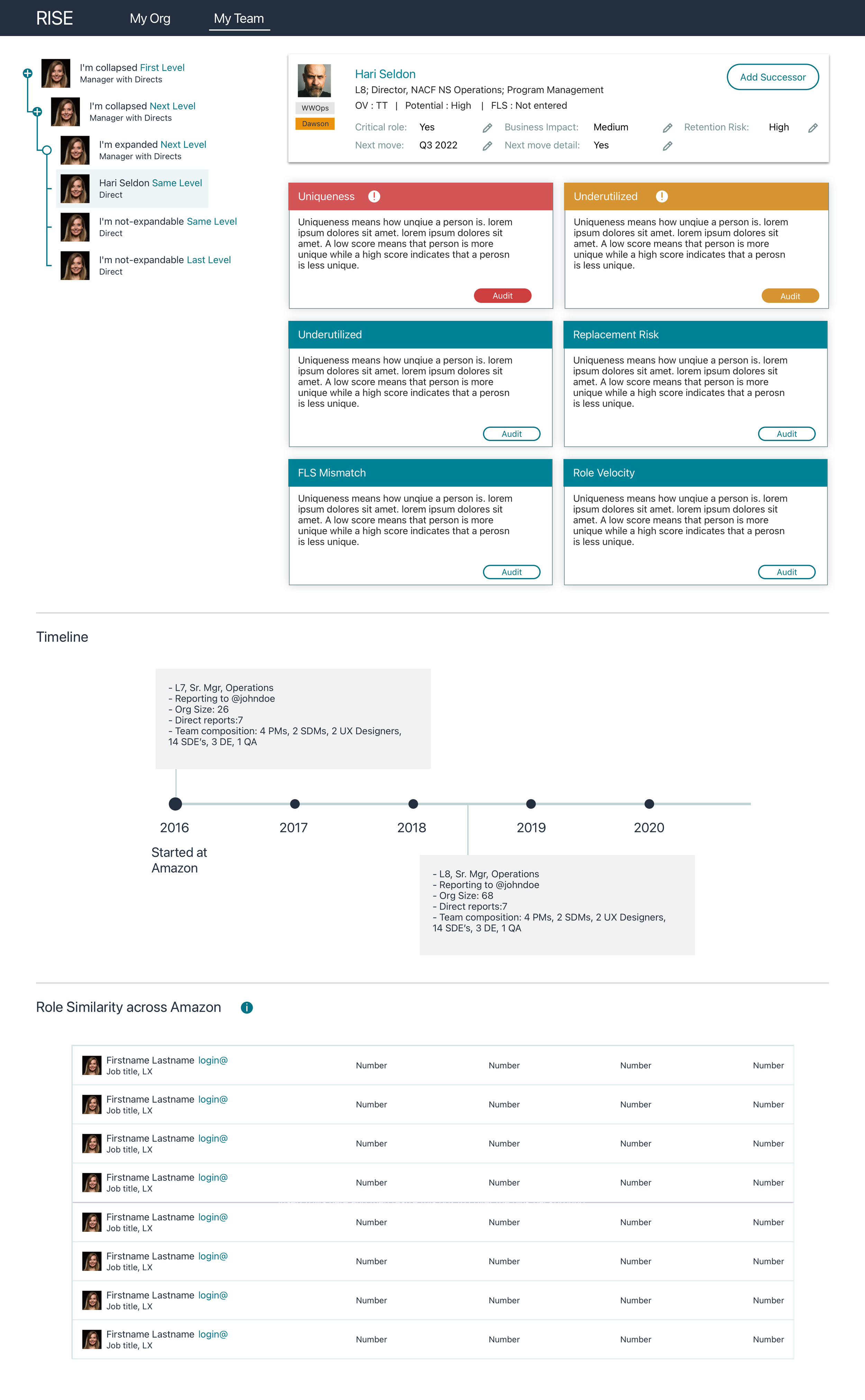
Rise (Org and Succession Planning)
Challenge
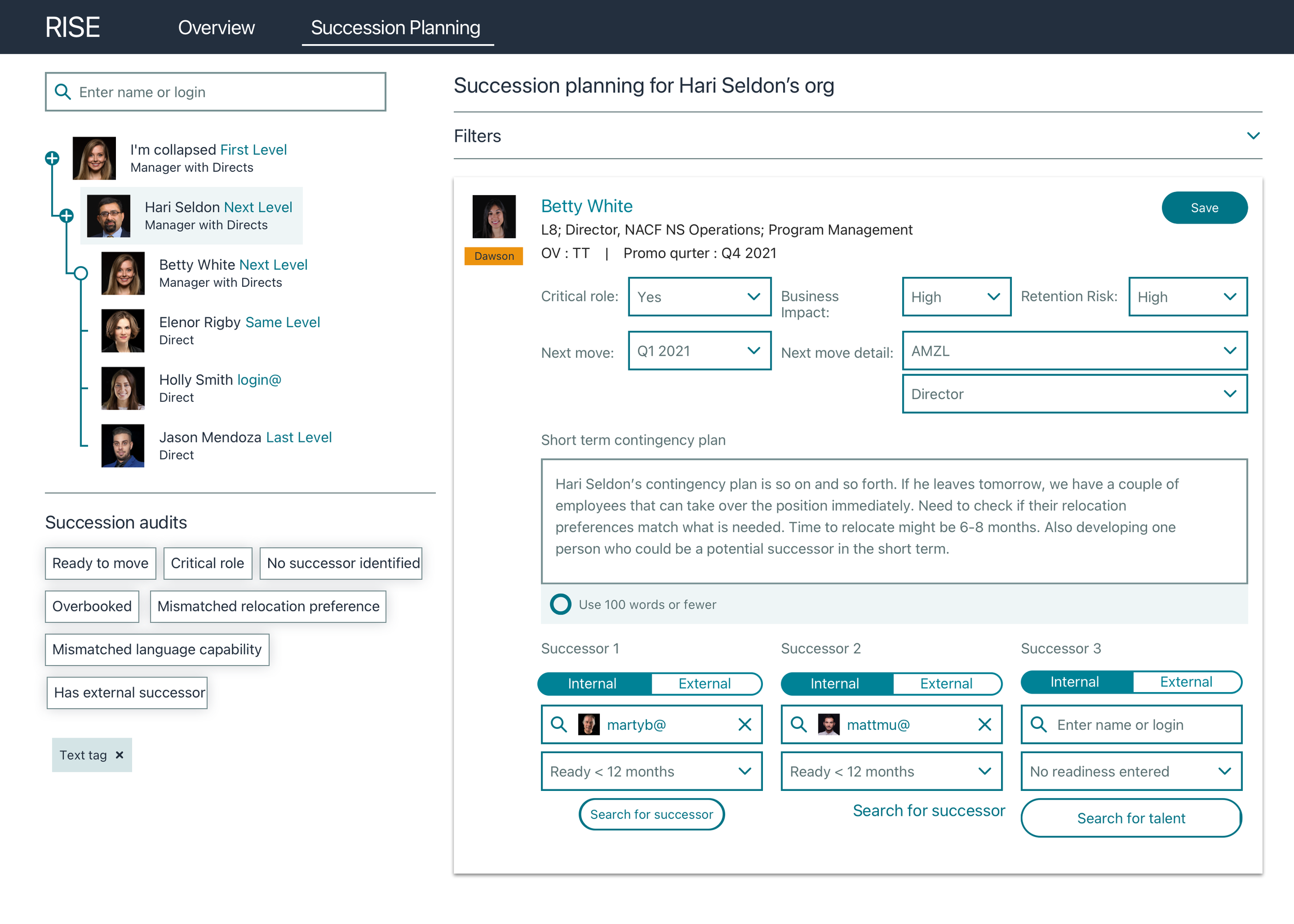
Succession and org planning at Amazon was historically a retroactive compliance exercise. Leaders managed critical succession data in offline Excel spreadsheets, leading to data decay the moment the file was saved. There was network bias in appointing successors and no real way to identify downstream gaps.
Requirement
Visualize risk and readiness
Identify downstream gaps
Close the loop by enabling talent actions.
Codify succession and planning into a company wide standard.
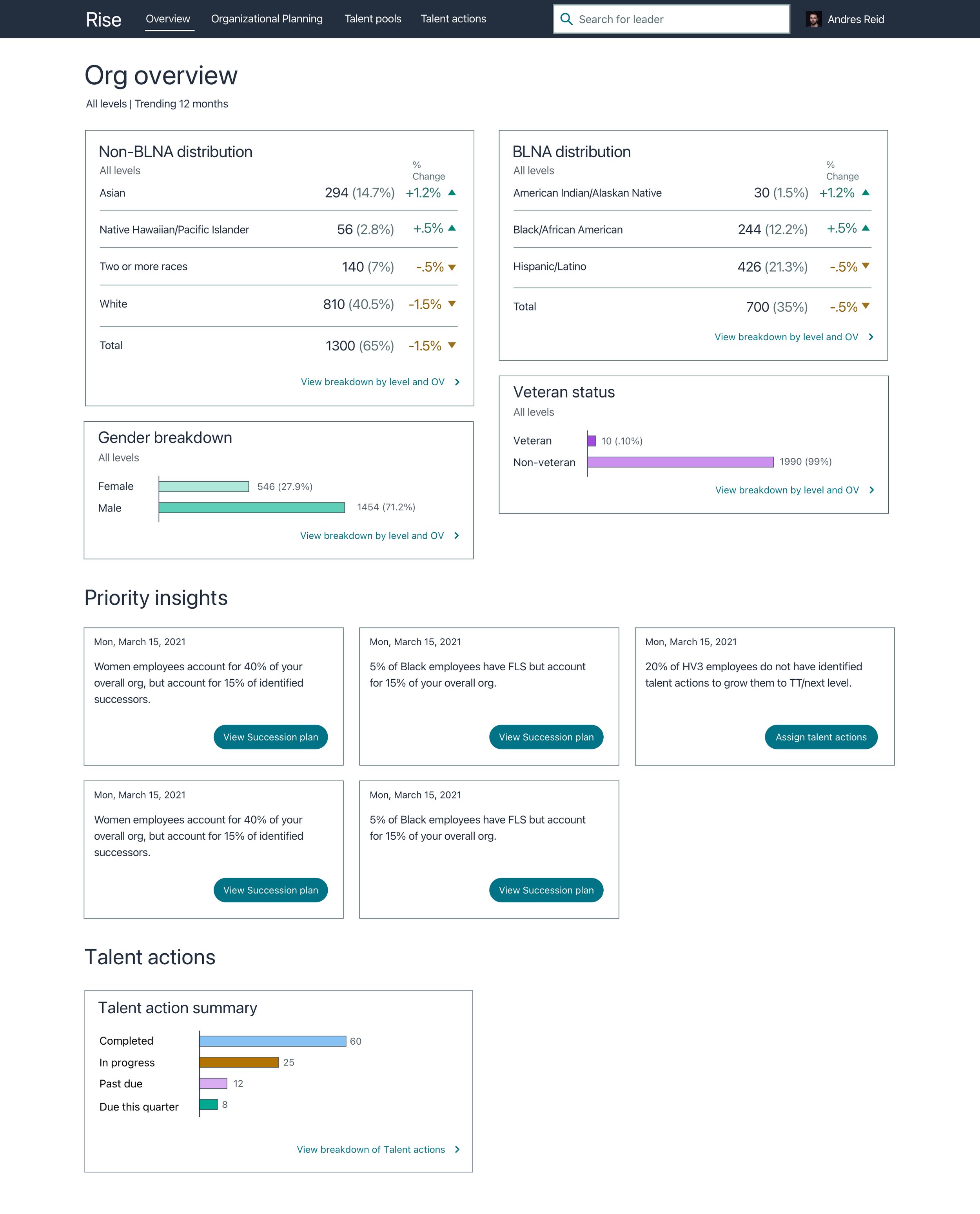
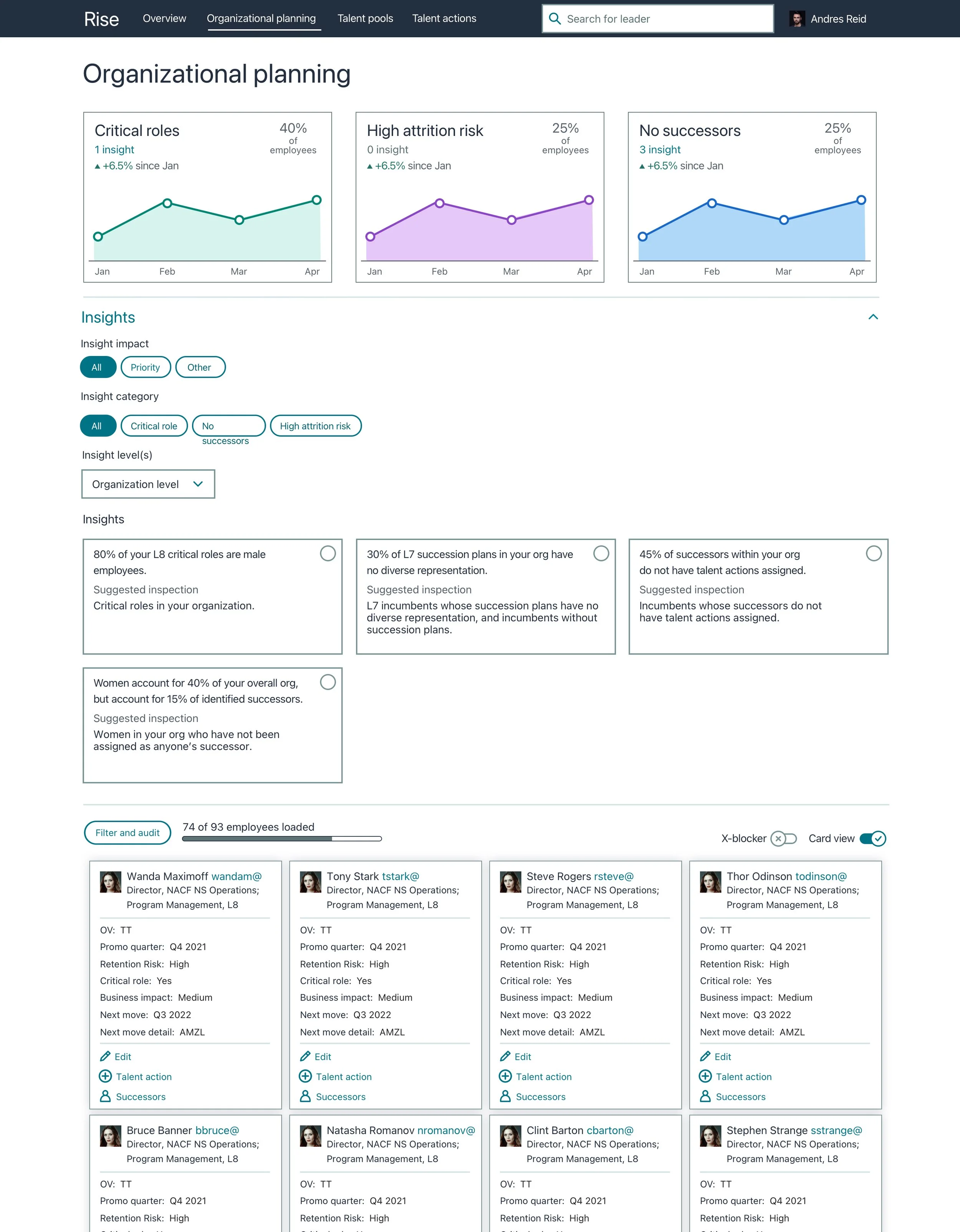
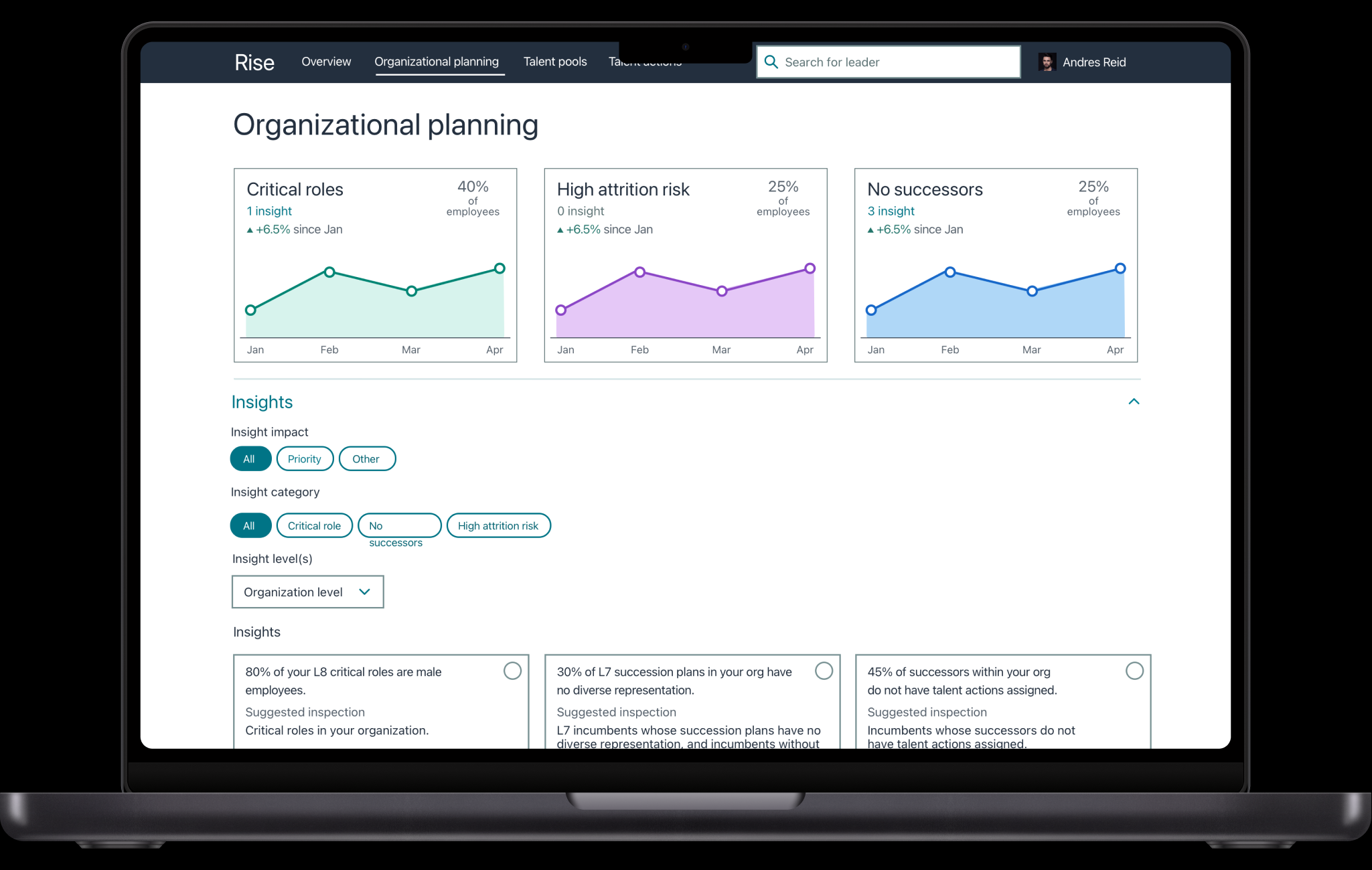
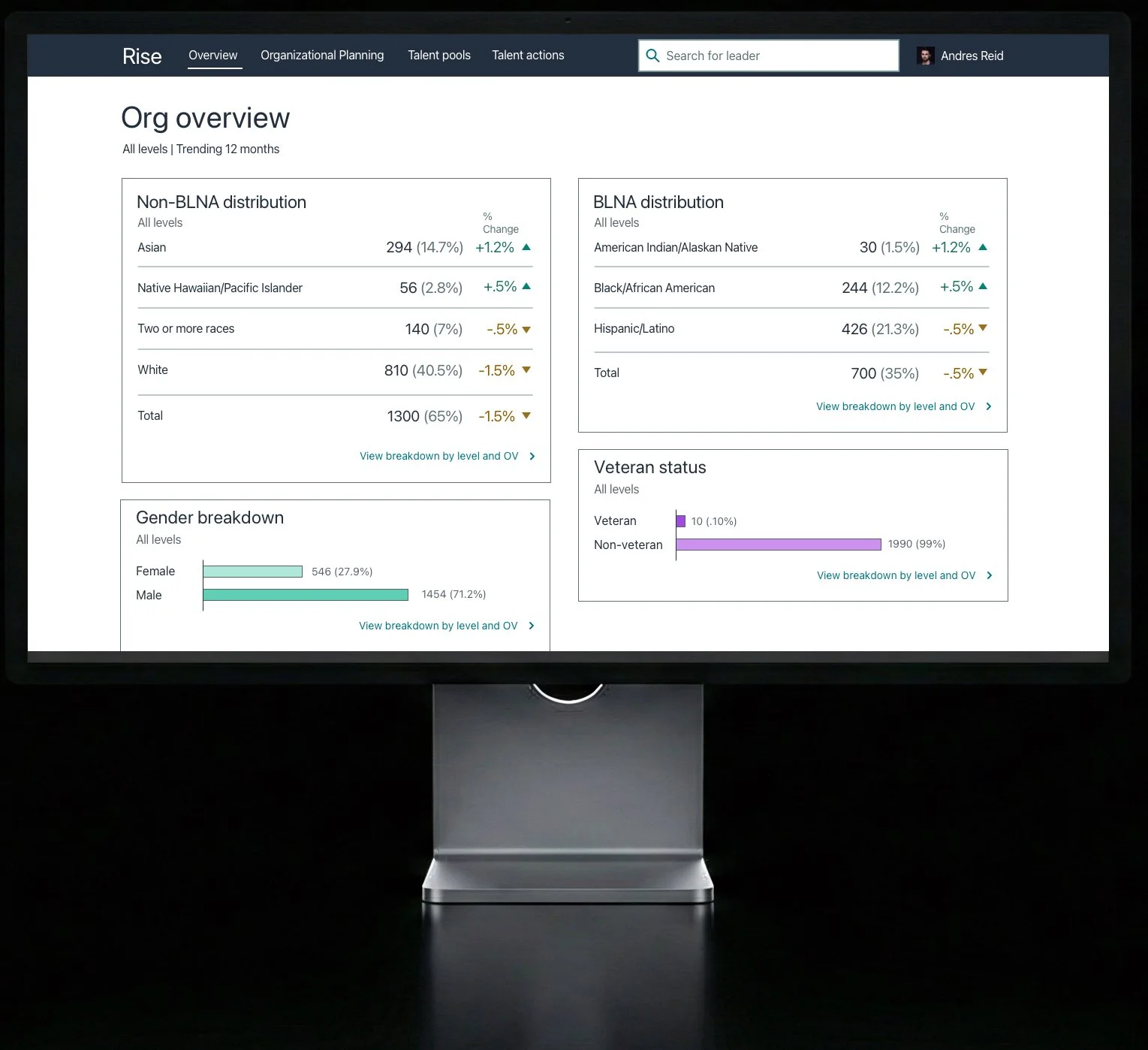
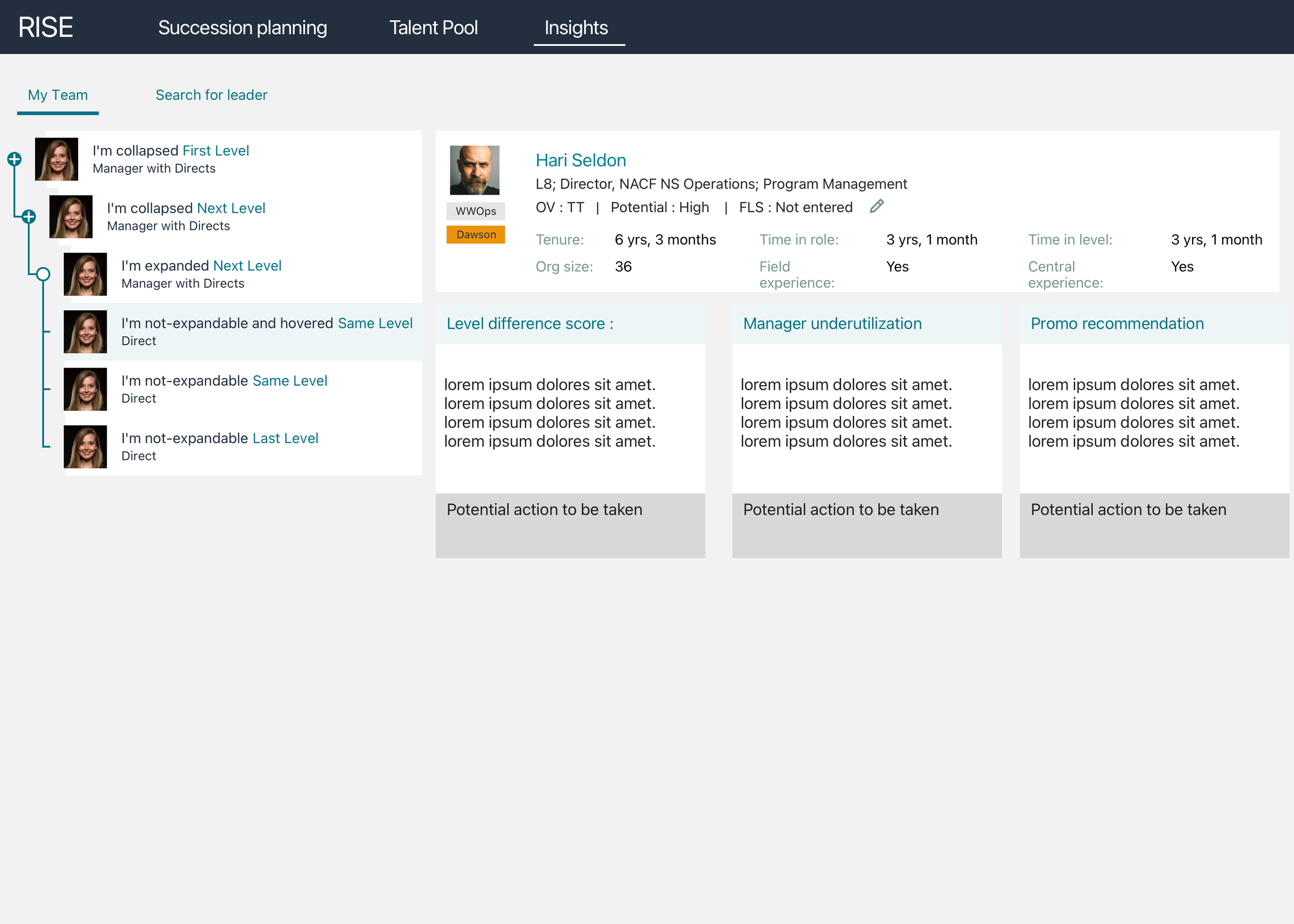
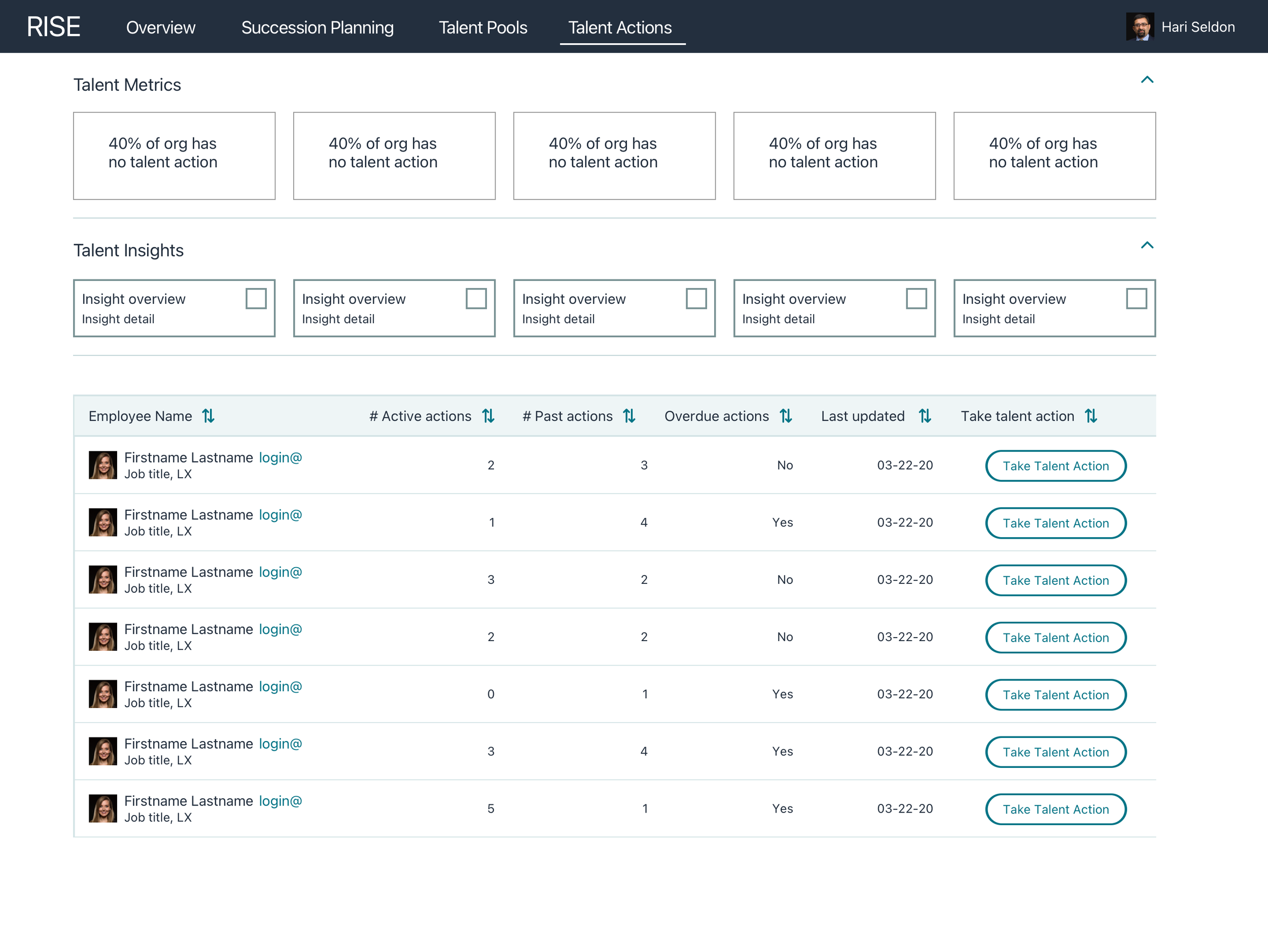
Rise dashboard to get a bird’s eye view of org health broken down by metrics. Insights are surfaced and prioritized based on importance. Talent actions are put in the center as a way to assign action and develop talent.
Manage org health by finding talent that are critical roles, have a high attrition risk, and have no successors.
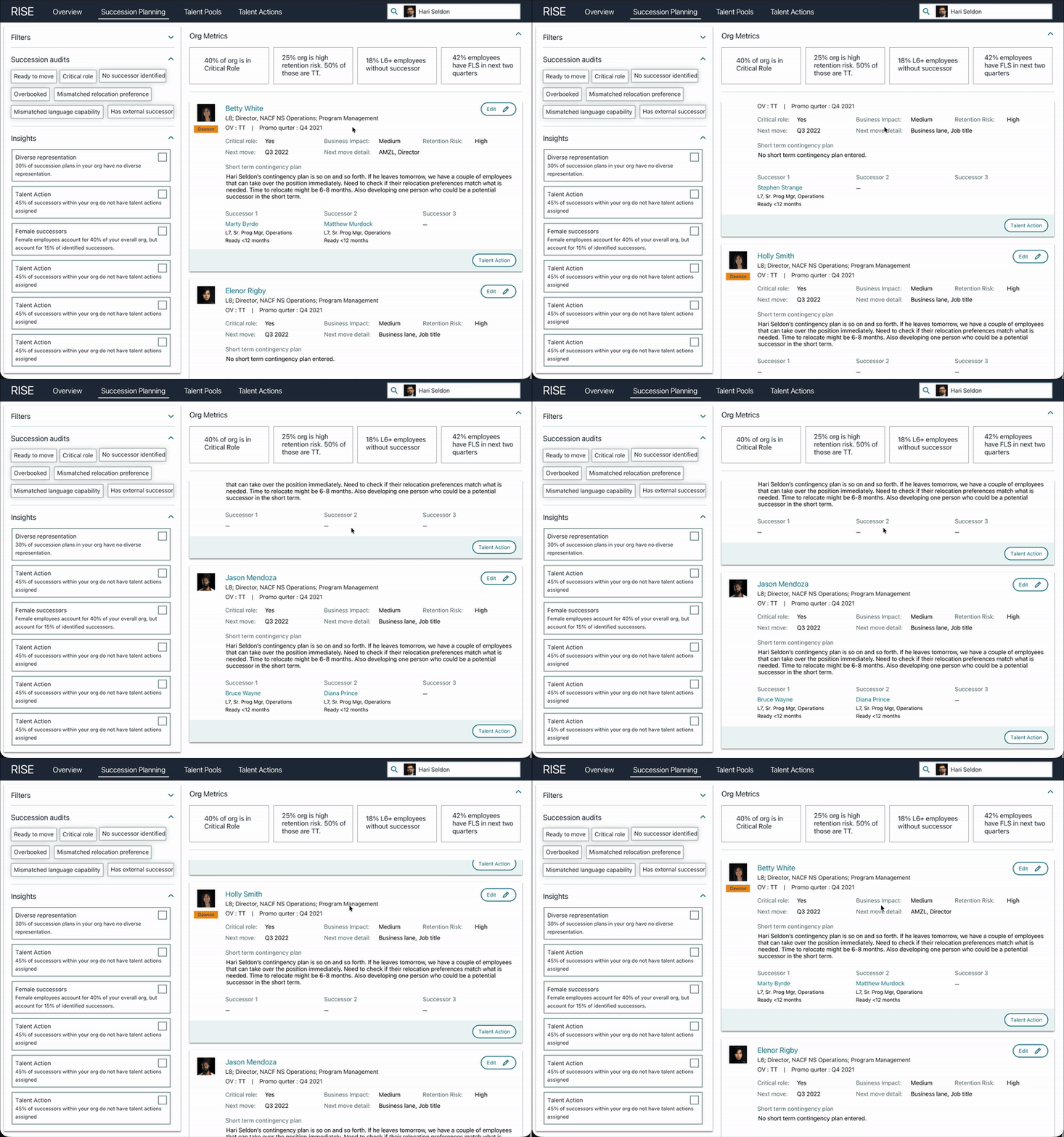
Get insights on your most important employees and develop plans to grow them.
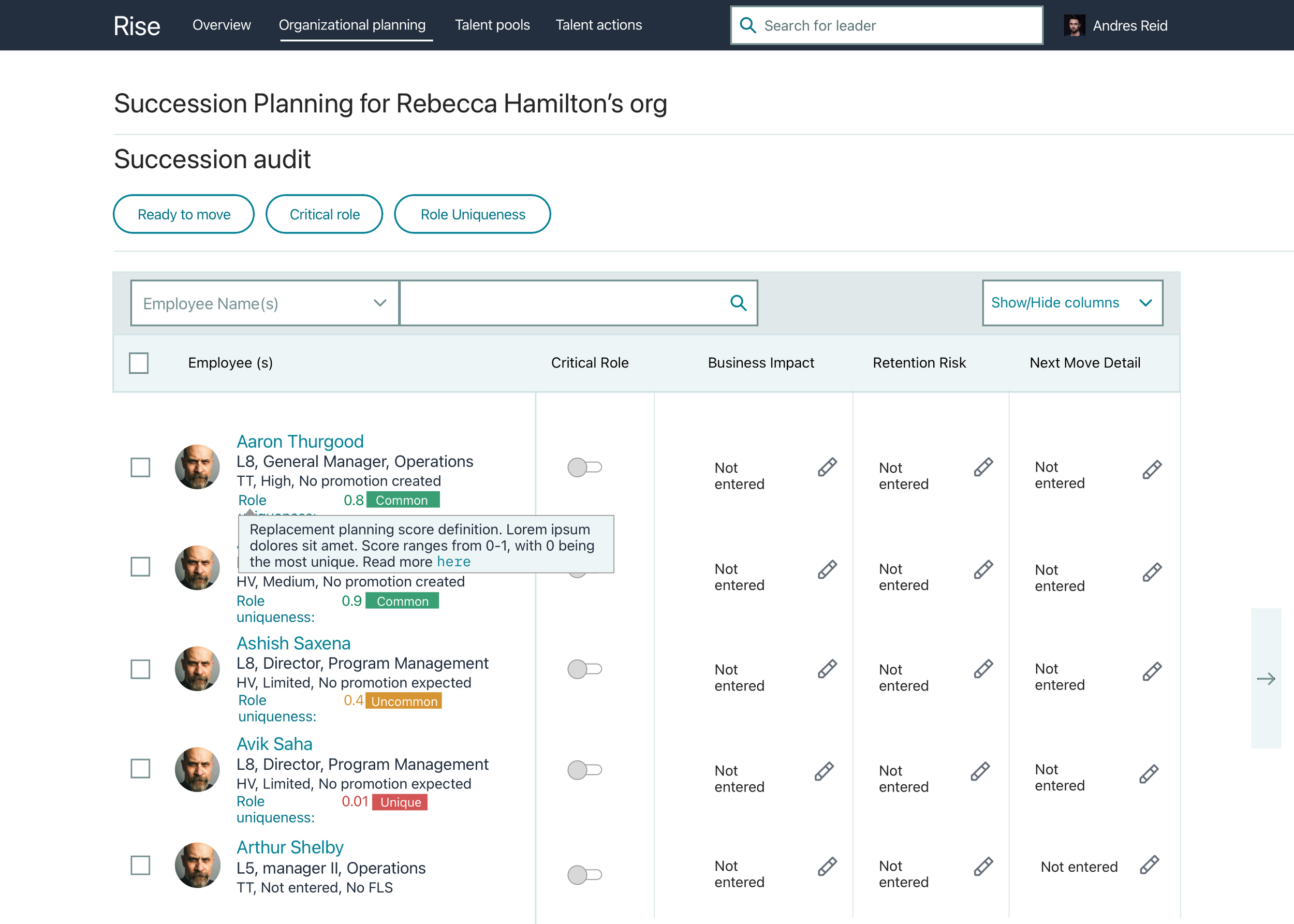
System assigns uniqueness score to employees in your org in order to find and close choke points in continued operational excellence.
Fluid (Talent Movement in Ops)
Challenge
While Amazon delivered packages to customers in 24 hours, moving an employee internally to a new role took an average of 48 days. 8 different approvers needed for a single transfer. With 1,000 new sites launching in a single year and over 22,000 lateral transfers occurring annually, the manual overhead was costing millions and risking operational continuity
Requirement
Proactive risk monitoring.
Automated approval logistics
One click approval for most transfers.
Smart matching.
Predictive logic.
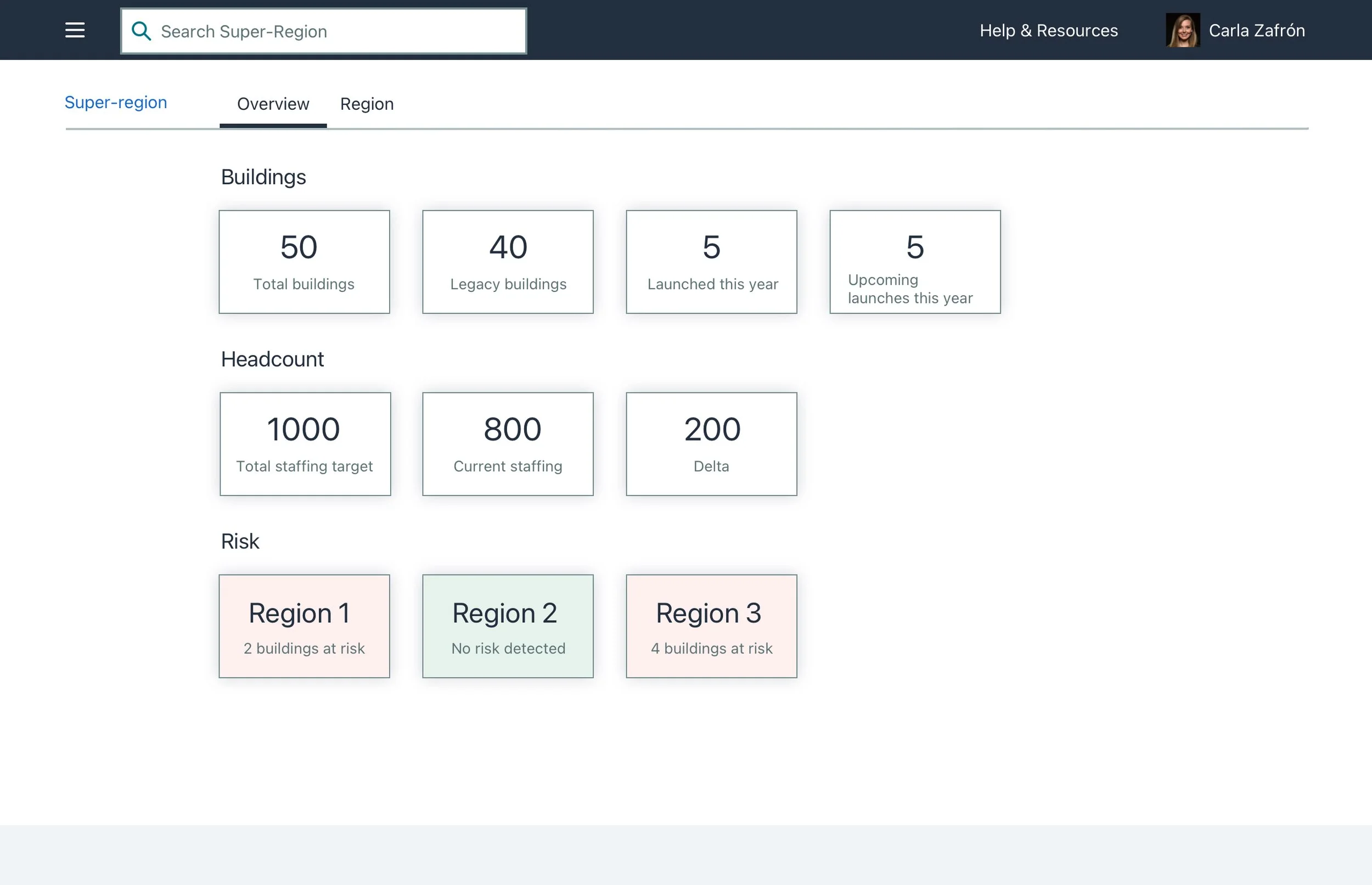
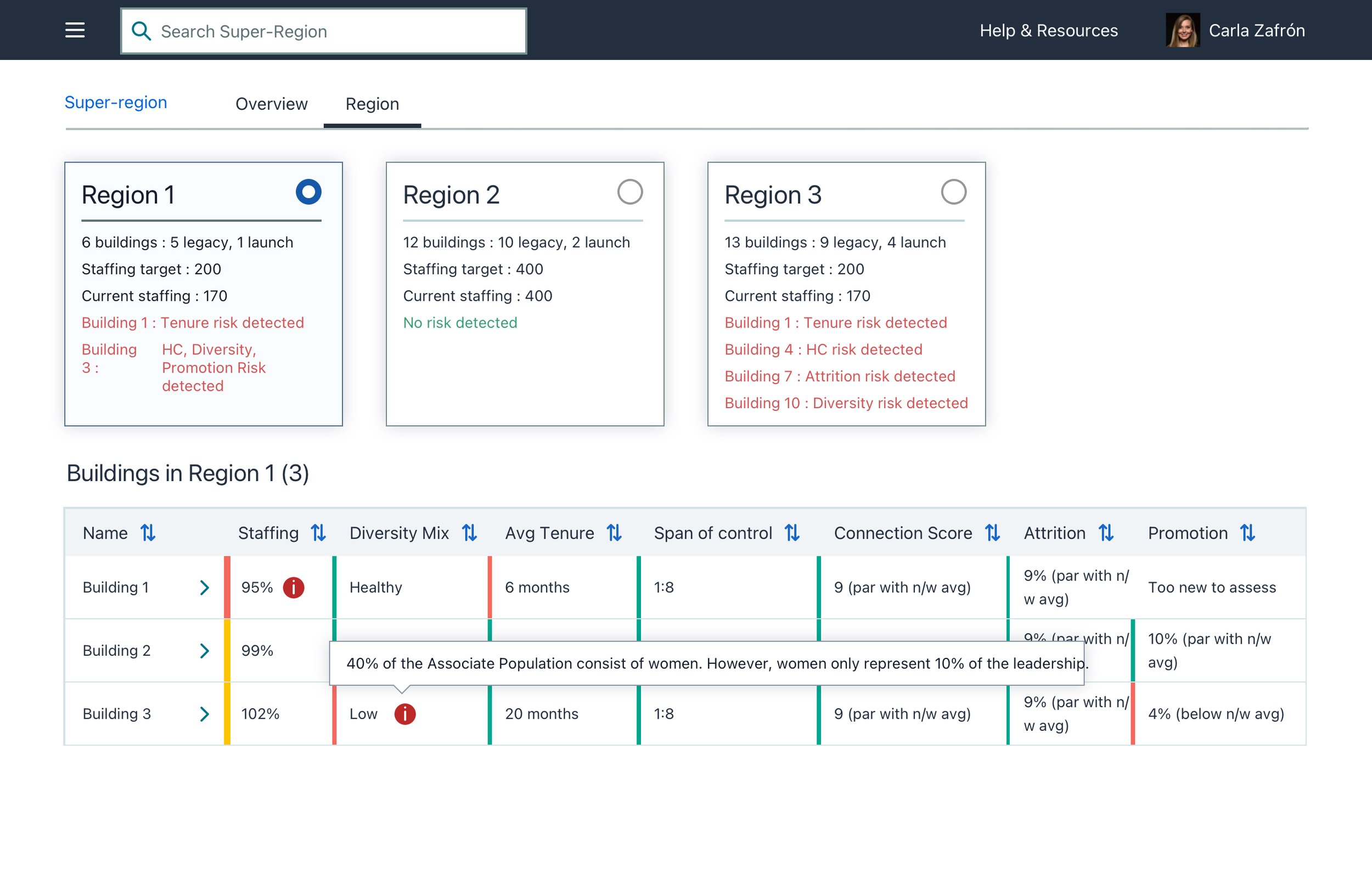
Region/subregion health
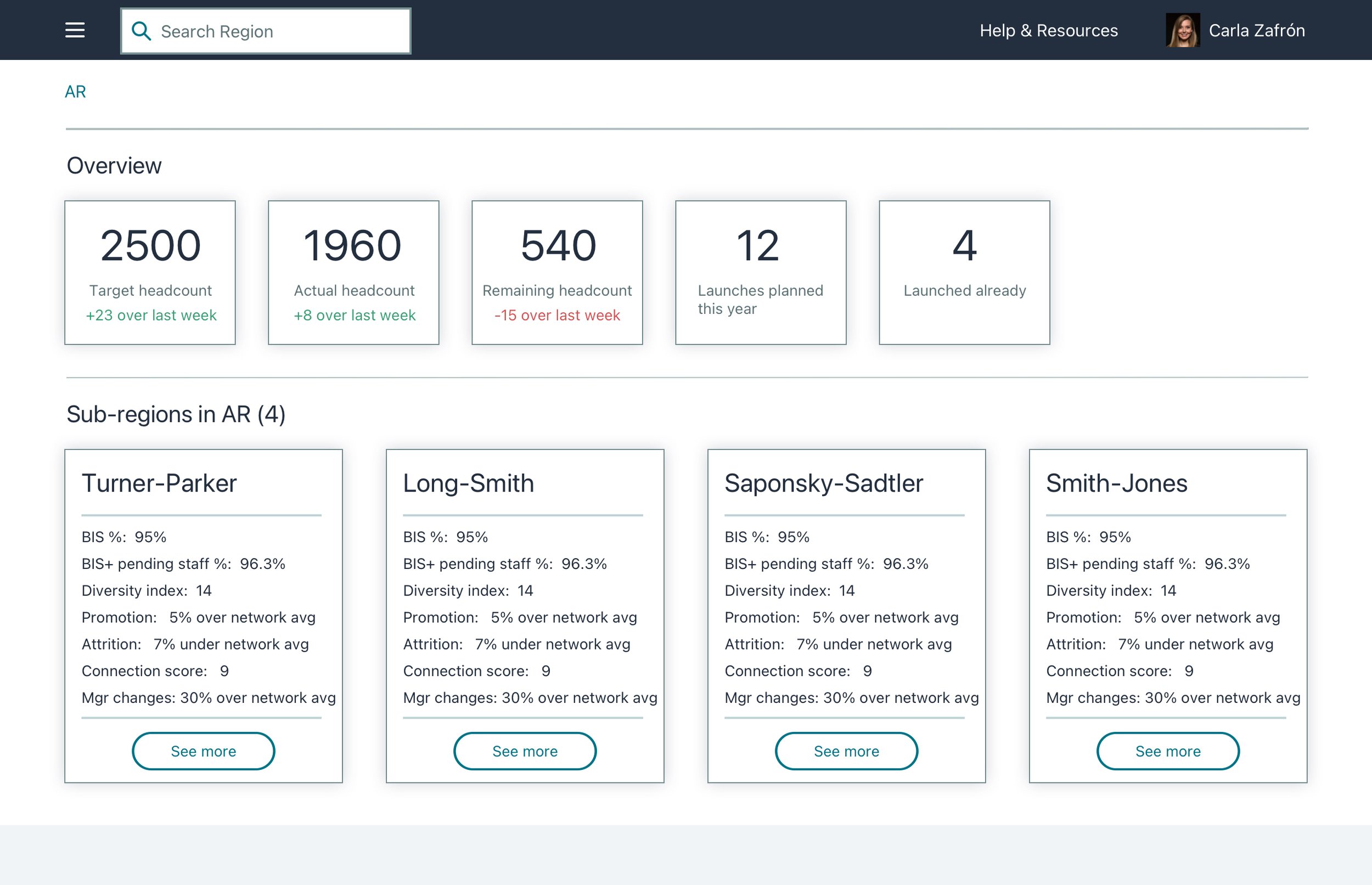
Regional bird’s eye view
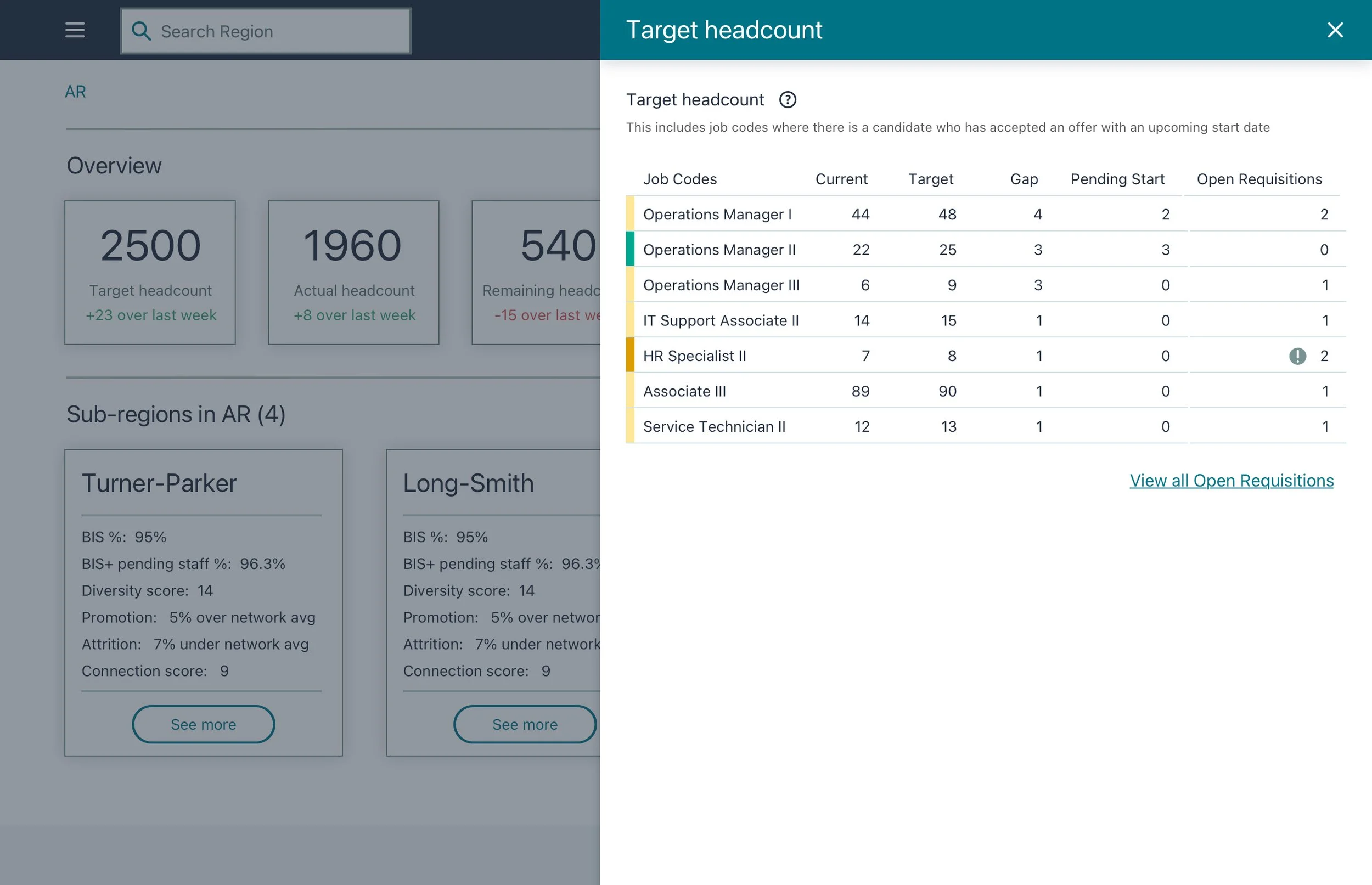
Target headcount for proactive predictions
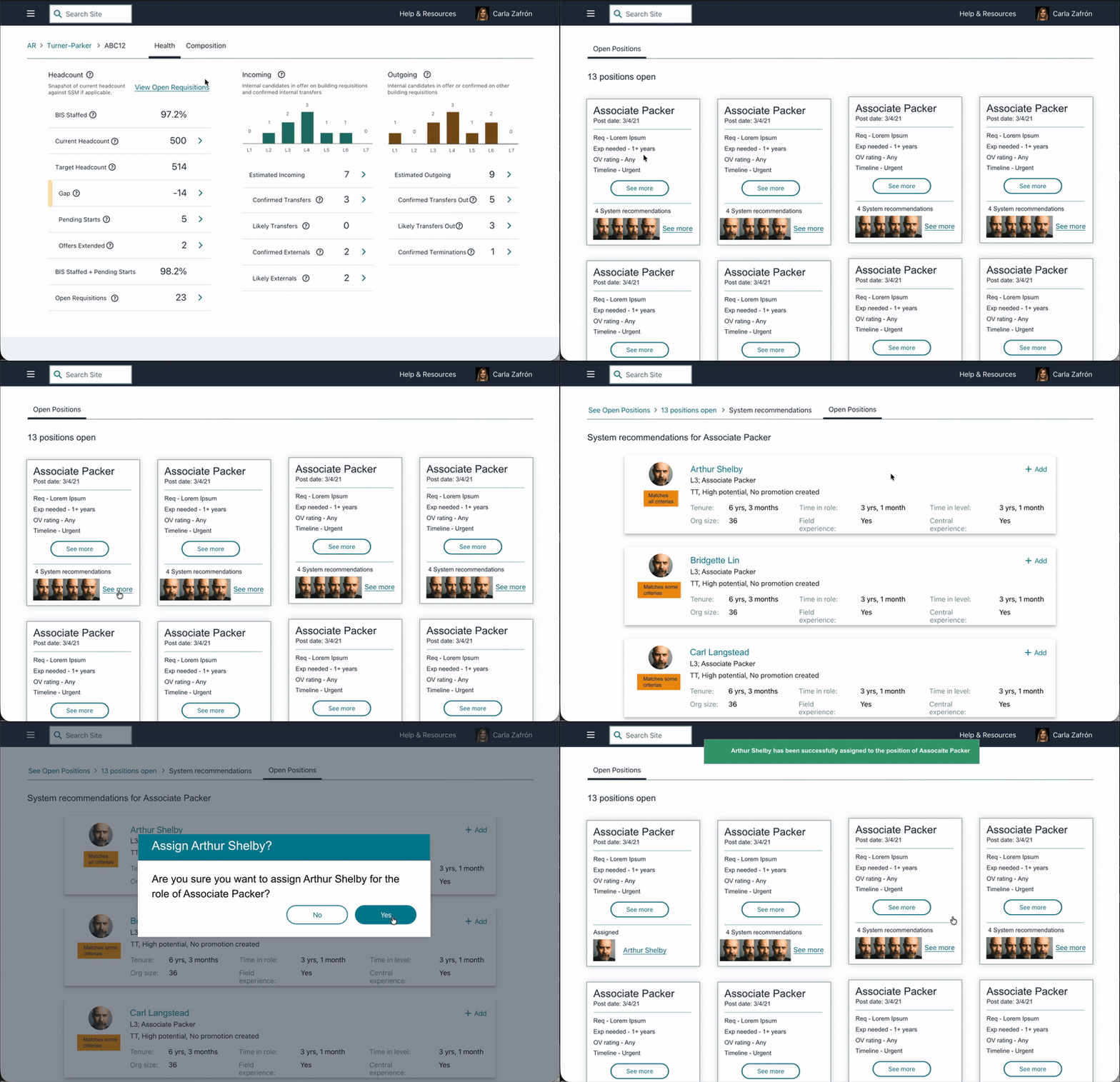
Simple add experience
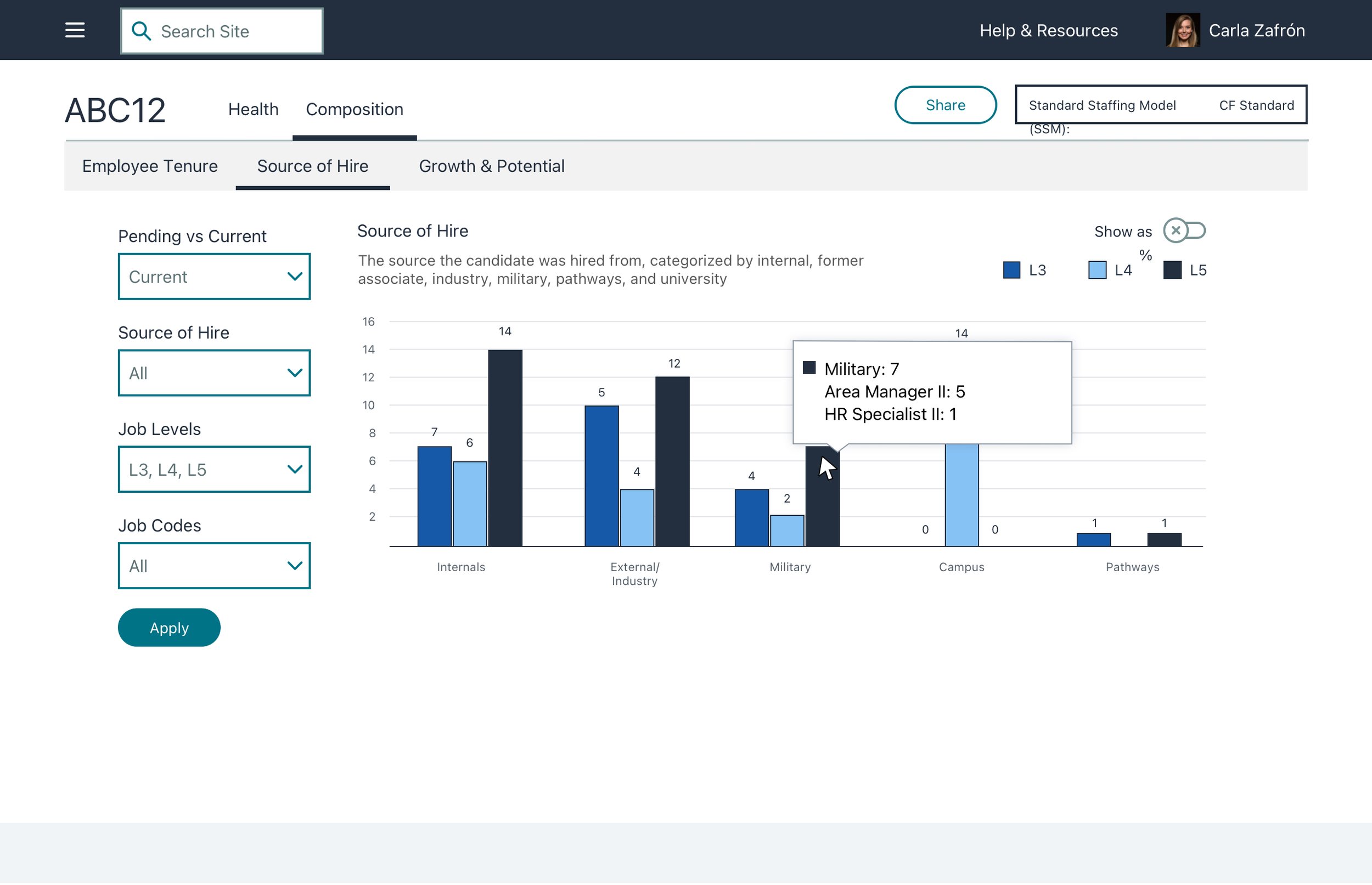
Deep dive into site composition
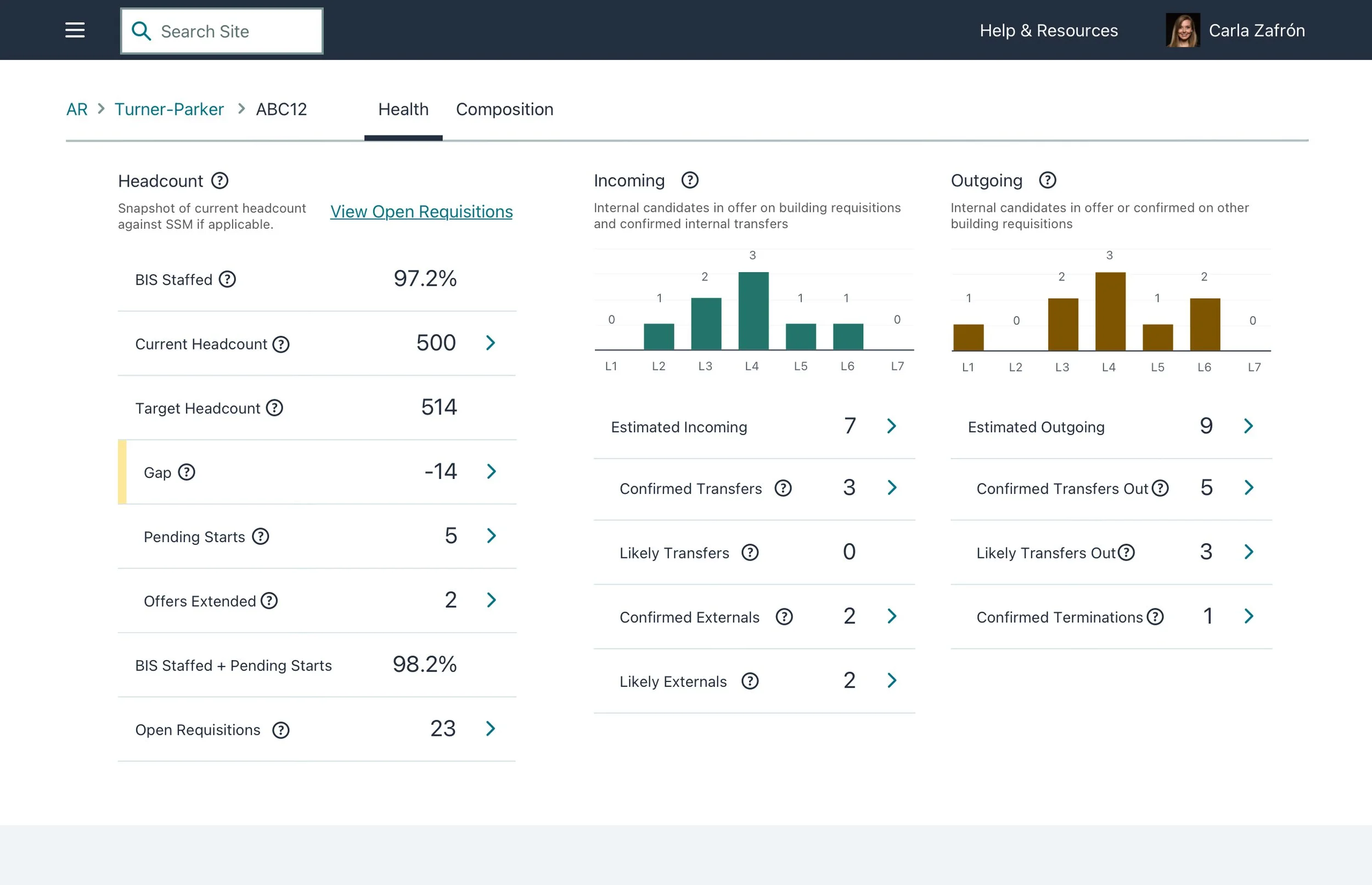
Site view for managing site health.
Hand off to development
When the project started, there was no real design system to use. The global design team responsible for HR supporting ops had just started working on components but we wanted to go ahead and launch products that were of immediate benefit to customers and then later retro fit the design to meet those guidelines.
This meant working together closely with the development team to make sure that they had all the right information and components needed to create a unified set of products. I detailed specifications for products to make sure that they aligned with the designs as closely as possible. Similar spec sheets for made for all pages and components to make sure they aligned with the best usability principles.
Design Explorations
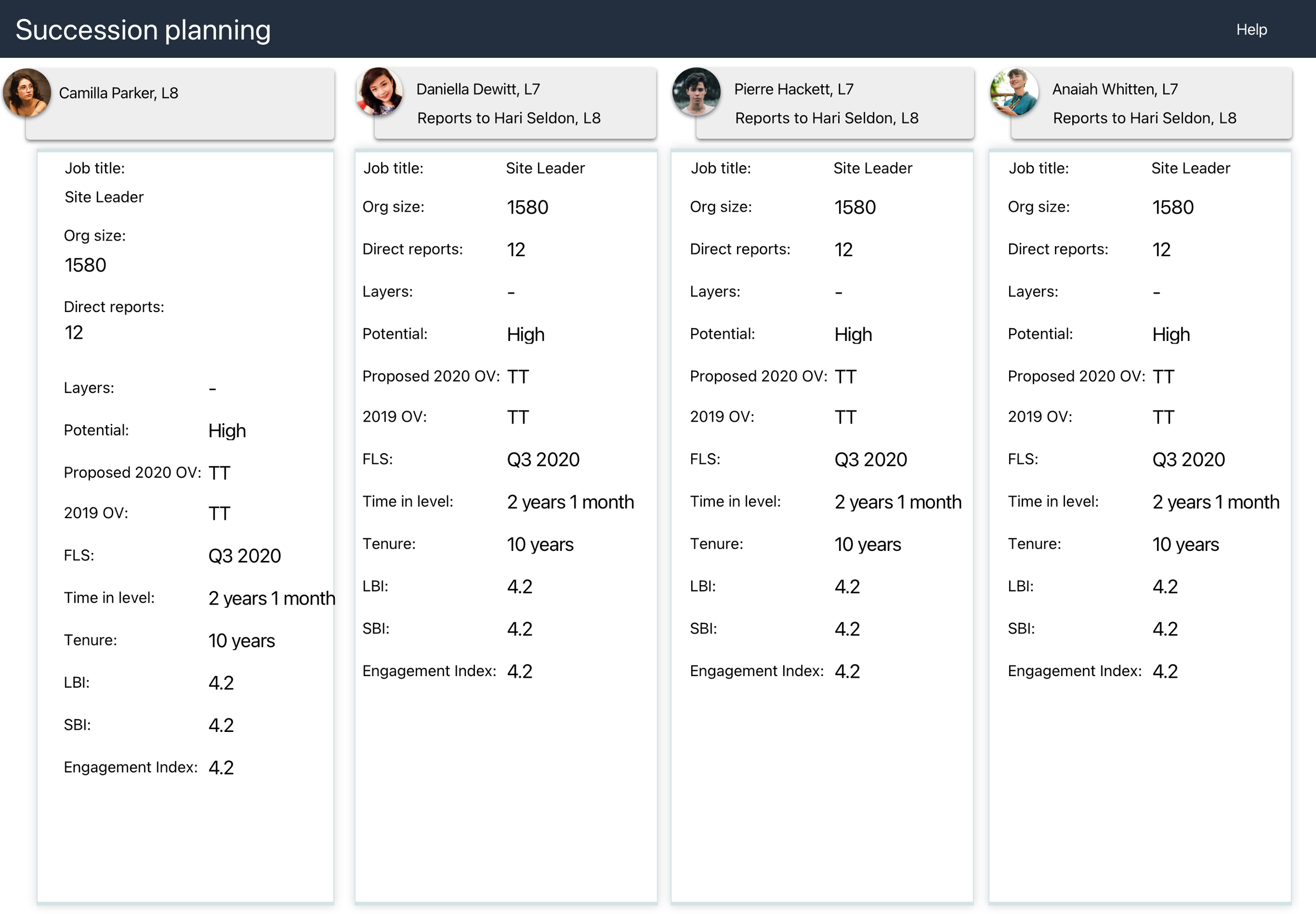
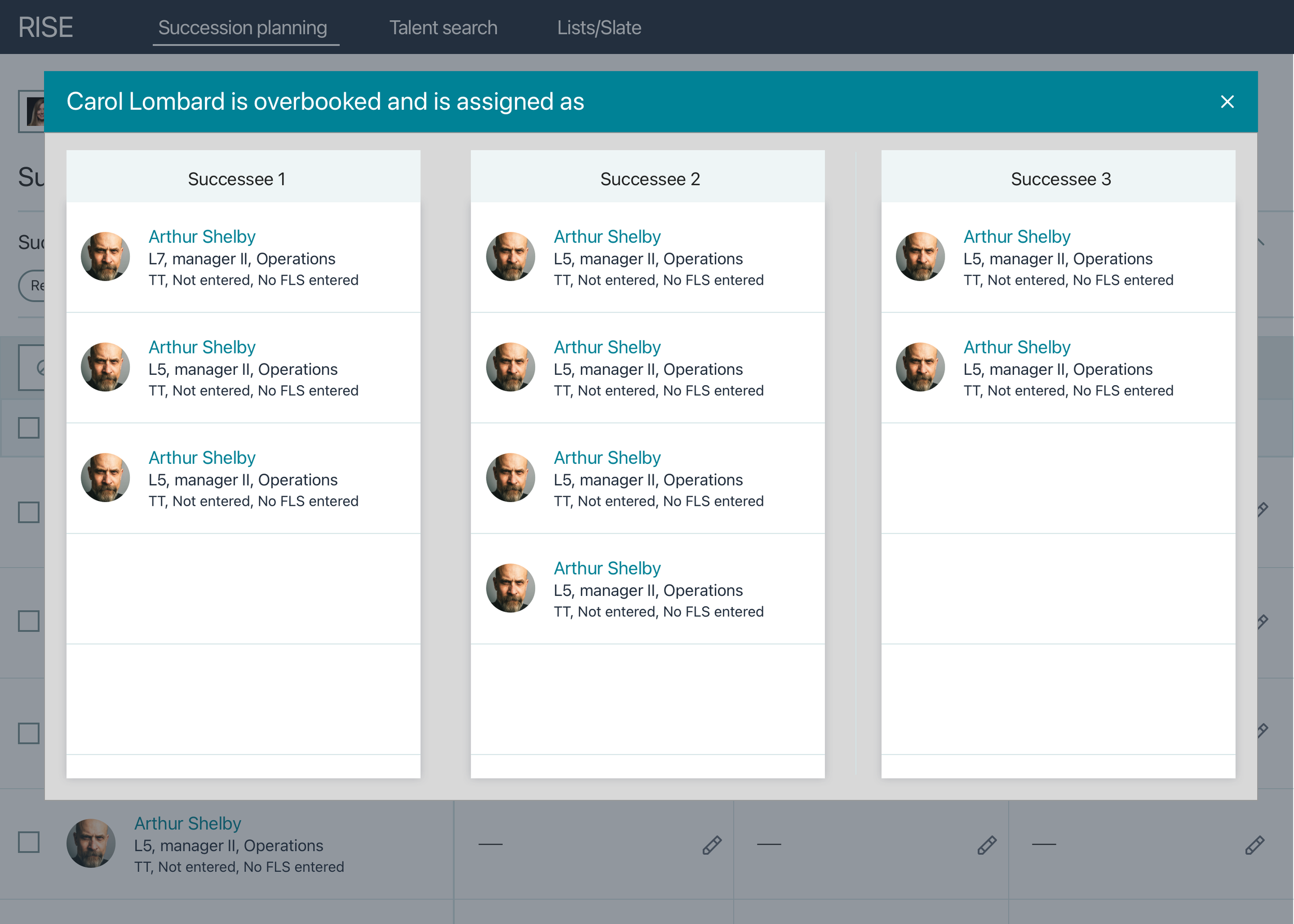
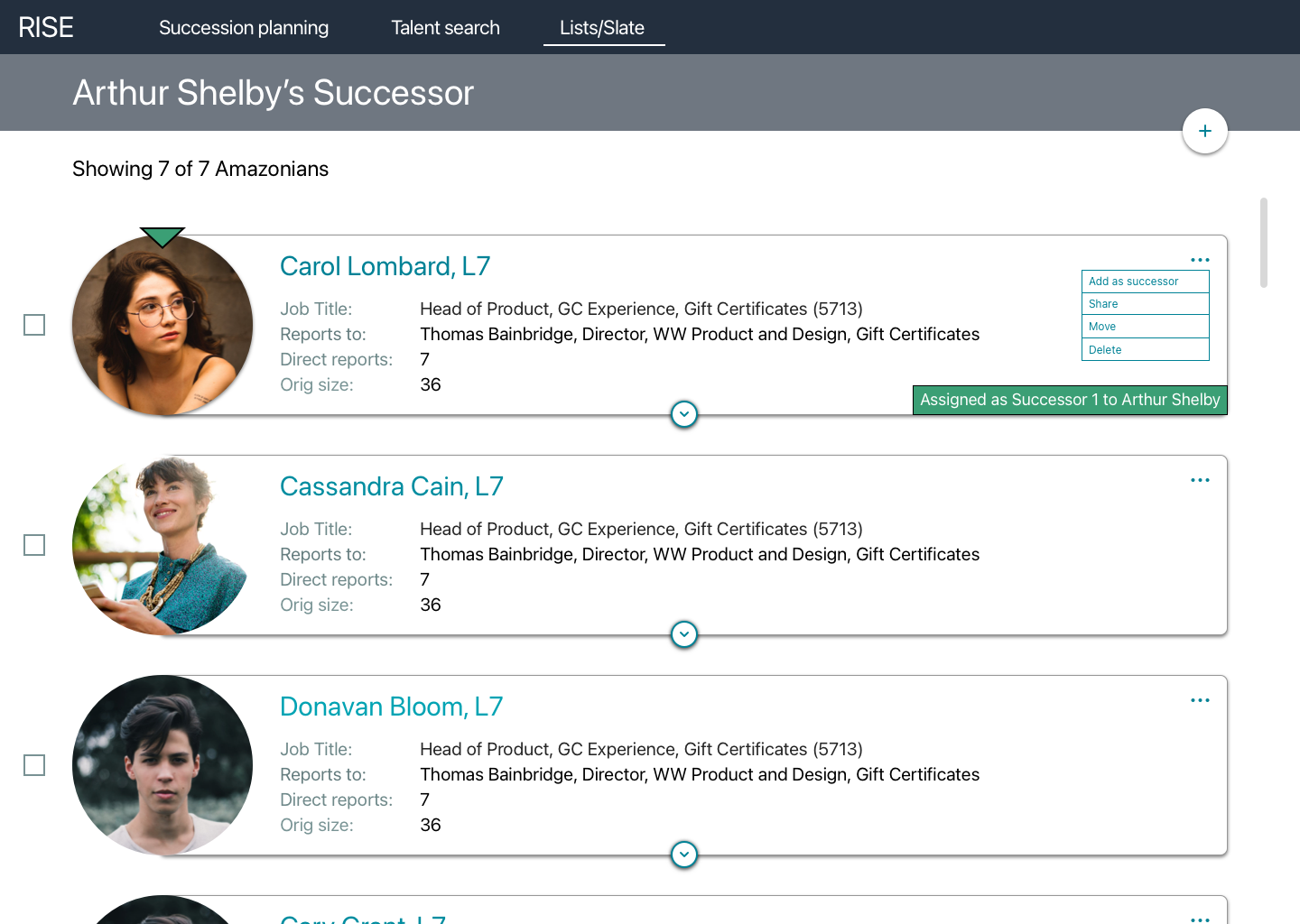
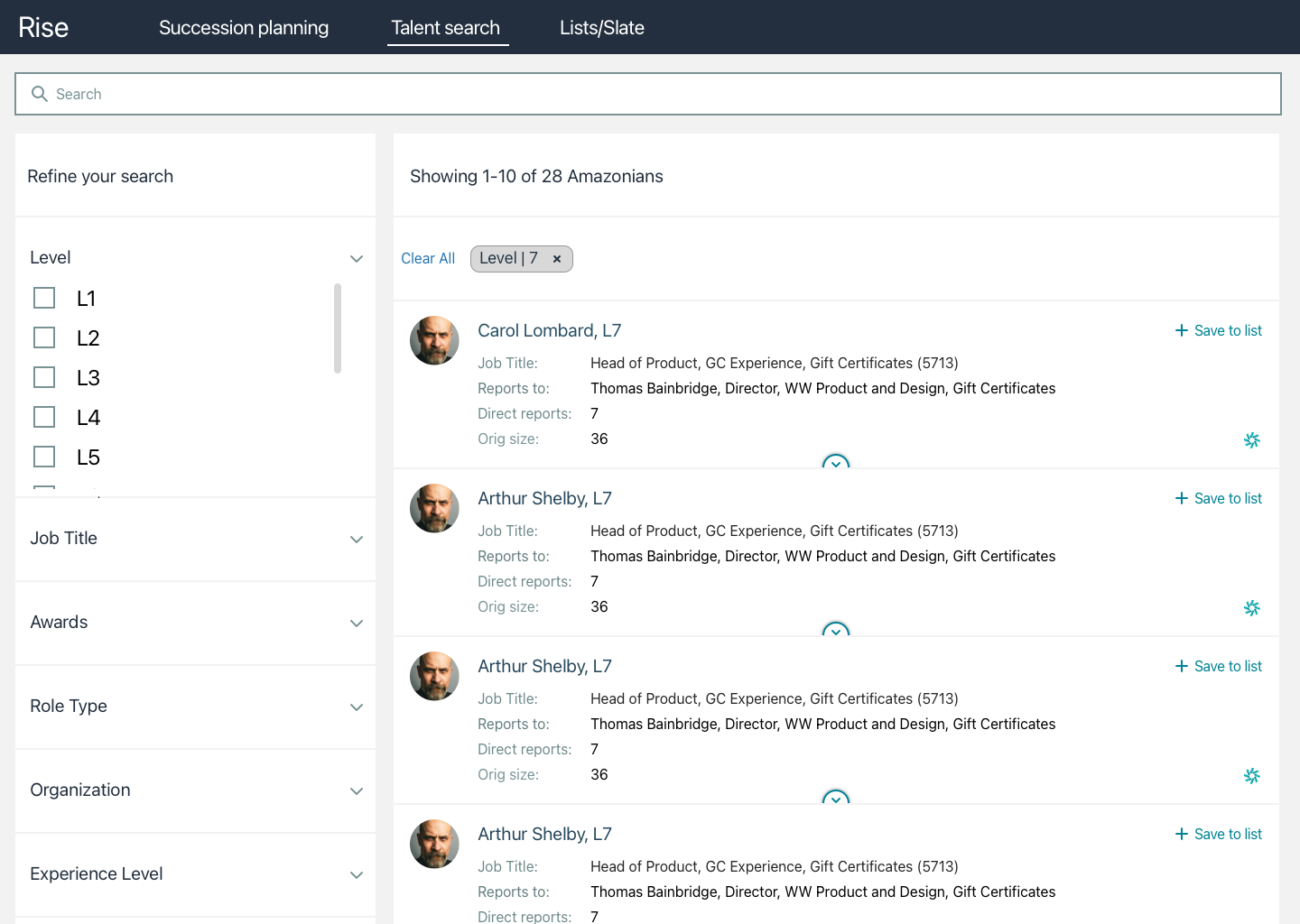
The following are some designs that were explored as the products were being built. They were rejected either because they were voted out by other designers during design critique sessions or scored low by users during user testing. Regardless, I felt it was important to showcase the breadth of exploration and iterative work done to get to the final results.
Result
<24 hours
Time taken to fill role
$10 Million +
Run rate saving
Single
Click approval workflow
100%
WCAG 2.1 AA Compliant
700+
Man hours saved per month
Immediate
Time to find talent
Triple digit
Month over month user growth
Unified
Experience across products
Customer Testimonials
“The Executive Talent Profile is a life saver for our team! We no longer need to spend hours to days collecting and analyzing employee insights for our executive population. We can pull this information in real time.”
— VP, World Wide Operations“Fluid was able to attribute risk to each of my buildings... This is an absolute game changer as it provided complete transparency... eliminated countless hours of manual effort, and accelerated the backfill of positions to ensure the health of my legacy sites.”
— Regional Director, World Wide Operations"I open Fluid and immediately see if my building is at risk, or not. Just the other day, I was able to see a bench of available employees and completed an internal transfer in less than 24 hours. All I had to do was click Approve. It’s so intuitive. I don’t even think about staffing levels anymore."
— VP, Global Delivery Services“Finally! The ability to tap into an exclusive profile of any leader in my organization has greatly reduced the stress and challenge of filling my most critical roles. This tool provides a mechanism to find needle in a haystack talent with ease. Now, I can just search for the talent I want”
— VP, Global Delivery Services[Rise] pointed out that while female employees account for 48% of my org, only 15% are identified successors to higher level roles. But what I loved most is that it didn’t stop just there, it showed me a short list of female employees who were already performing at the next level so my leaders and I knew where to focus
— VP, Delivery OperationsIn my Q1 OLR, I saw that 7% of my employees were rated LE [Least Effective]. With Rise 2.0, I felt so much more confident that by the next review, we will be reviewing more equitable curves across my organization."
— Site Leader, World Wide Operations